

Rice mills and paddy farmers across Southeast Asia generate millions of tons of rice husk every year, and for most operations, it remains an unresolved burden. Burning it openly releases black carbon and greenhouse gases into the atmosphere, while leaving it to decompose offers no economic return and creates a persistent waste management problem.
At the same time, corporations under ESG mandates and net-zero commitments are actively searching for high-quality carbon credits that can withstand scientific scrutiny. The gap between abundant agricultural waste streams and credible carbon solutions continues to widen, because the pathway to convert one into the other is rarely clear or accessible for smaller producers.
Rice husk biochar bridges that gap directly. By converting rice husk through a controlled thermal process called pyrolysis, agricultural businesses can produce a stable carbon-rich material that improves degraded soils, reduces the need for synthetic fertilizers, and generates verifiable carbon removal credits through recognized international frameworks.
What is Rice Husk Biochar?
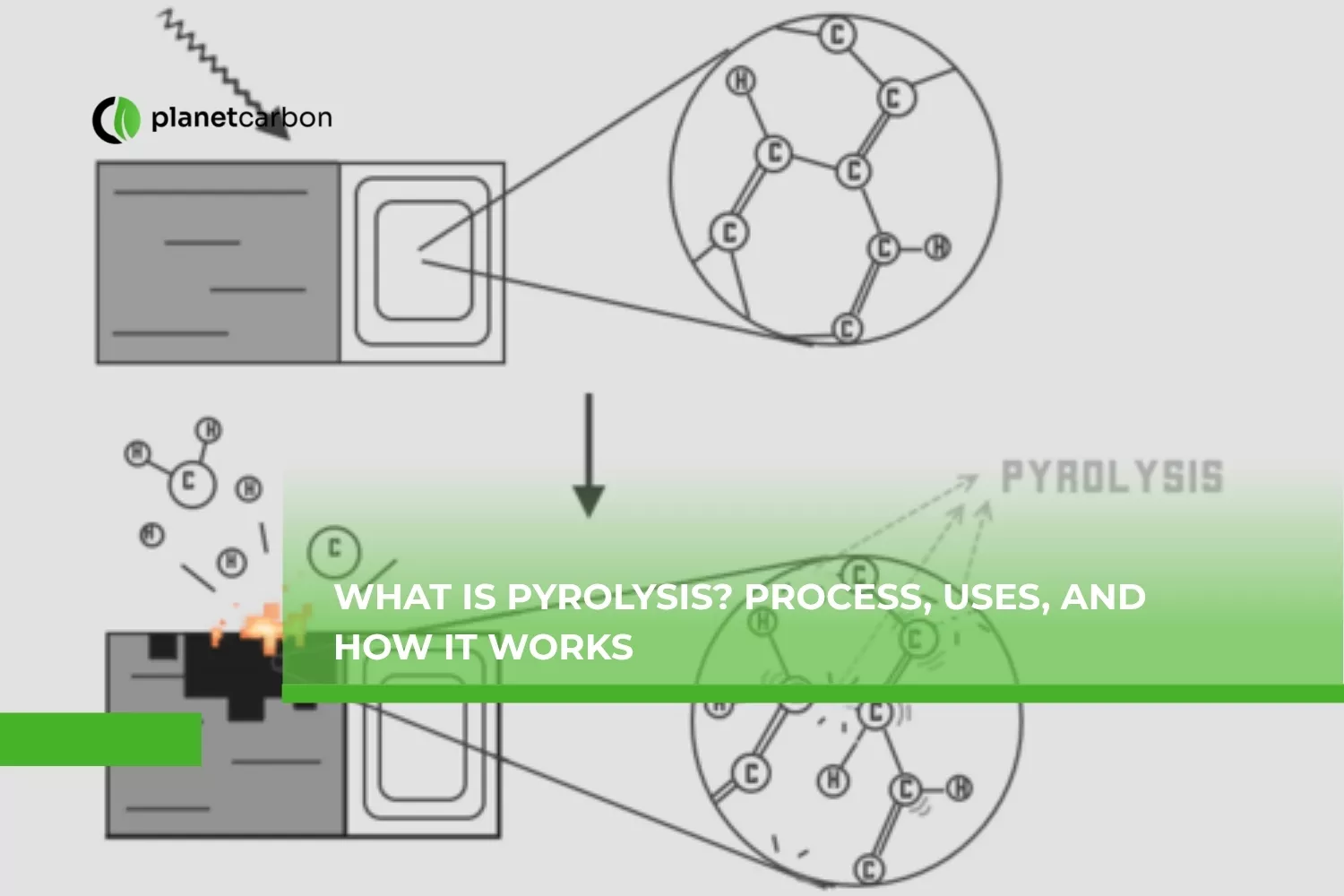
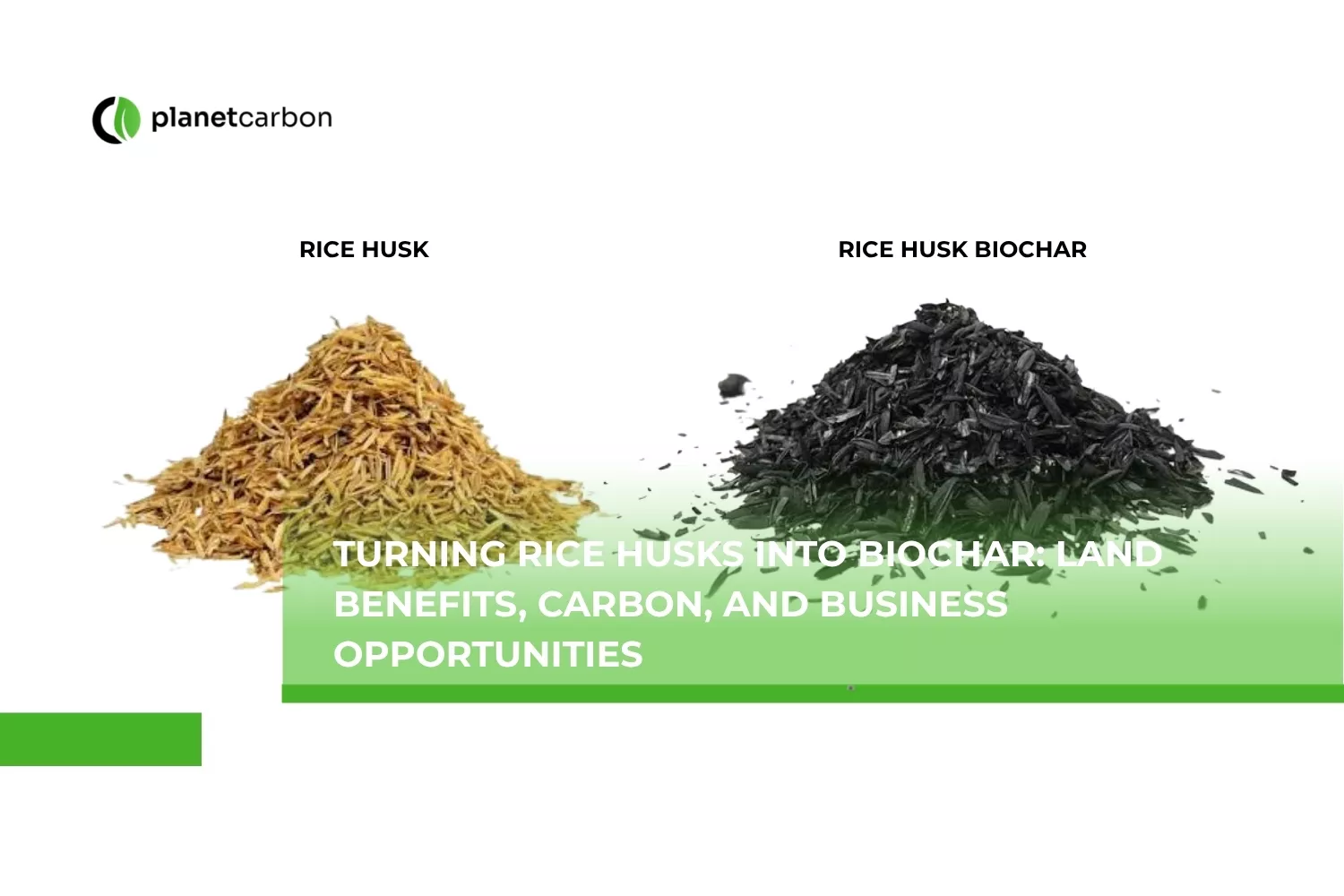
Rice husk biochar is a solid, carbon-dense material produced when rice husks are subjected to high-temperature thermal conversion in a low-oxygen or oxygen-free environment, a process known as pyrolysis. The result is a porous, black substance that is chemically stable and resistant to biological decomposition for hundreds to thousands of years.
What sets biochar apart from simply burning agricultural waste is the permanence of its carbon. When rice husks decompose naturally or are burned openly, the carbon stored inside them returns quickly to the atmosphere as CO2 or methane. Pyrolysis, by contrast, locks that carbon into a solid matrix that persists in soil indefinitely, making it one of the few genuinely durable carbon removal pathways available today.
Rice husk is particularly well-suited for biochar production because of its high silica content and relatively uniform composition across harvests. This consistency makes it easier to standardize production processes, control output quality, and meet the documentation requirements that carbon certification bodies increasingly demand from biochar project developers.
Benefits of Rice Husk Biochar for Agricultural Land Fertility
The agronomic case for biochar as a soil amendment has grown considerably stronger over the past decade, with a wide body of peer-reviewed research confirming its measurable effects on soil health across tropical and subtropical farming systems. For rice-producing regions across Southeast Asia, where soils are often intensively farmed and prone to degradation, these benefits carry direct economic relevance.
1. Increasing Soil Cation Exchange Capacity (CEC)
Cation Exchange Capacity measures the ability of soil to hold and supply essential nutrients such as potassium, calcium, and magnesium to plant roots. Soils with low CEC lose nutrients rapidly through leaching, which forces farmers to apply synthetic fertilizers more frequently and at higher cost.
Biochar’s highly porous surface structure dramatically increases the number of binding sites available for cation exchange. Studies have shown that applying biochar to tropical soils at rates of 5 to 20 tonnes per hectare can increase CEC by 20 to 40 percent, depending on soil type and biochar feedstock characteristics, according to research published in journals including Geoderma and Soil and Tillage Research.
For paddy farmers, this translates into more efficient use of existing nutrient inputs and a measurable reduction in fertilizer expenditure over successive growing seasons.
2. Improving Soil Physical Structure and Water Retention
Repeated tillage and the weight of irrigation equipment compact agricultural soils over time, reducing the pore space that roots and soil organisms depend on. Compacted soils drain poorly, hold too little water between irrigation cycles, and ultimately reduce yields even when nutrient levels appear adequate.
Biochar improves soil structure by introducing a stable porous network that resists compaction and increases water retention capacity. Research from the International Biochar Initiative indicates that biochar application can increase plant-available water content in sandy or degraded soils by up to 18 percent, a significant advantage in regions where dry season irrigation costs are rising.
This improved water-holding capacity also reduces the frequency of irrigation needed, which lowers both labor costs and energy costs for pump-dependent operations.
3. Supporting Soil Microbial Activity
Healthy soils depend on a complex community of bacteria, fungi, and other microorganisms that break down organic matter, fix atmospheric nitrogen, and suppress soil-borne pathogens. Intensive monoculture farming, combined with heavy pesticide and synthetic fertilizer use, tends to deplete this microbial diversity over time.
Biochar provides a sheltered habitat within the soil profile where beneficial microorganisms can colonize and persist. Its porous structure protects microbial communities from fluctuating moisture and temperature conditions, allowing them to maintain higher activity levels between growing seasons.
Several long-term field trials in rice-growing regions of Southeast Asia have documented a 15 to 30 percent increase in soil microbial biomass following sustained biochar application, contributing to measurable improvements in nitrogen cycling efficiency and overall soil biological health.
Rice Husk Biochar as a Source of Validated Carbon Credits
Beyond its agronomic value, rice husk biochar holds substantial potential as a carbon removal asset within voluntary and regulated carbon markets. The key to unlocking that value lies in how biochar’s carbon permanence is measured, documented, and verified against recognized international standards.
1. The Working Principle of Carbon Removal from Biochar
When pyrolysis converts rice husk into biochar, a significant portion of the carbon that was originally absorbed by the rice plant during photosynthesis becomes structurally locked within the biochar matrix. Unlike carbon stored in living biomass or organic matter, this pyrogenic carbon is highly resistant to microbial decomposition and oxidation.
The permanence factor is what justifies classifying biochar as a carbon dioxide removal (CDR) pathway rather than simply an emissions avoidance measure. Independent scientific assessments, including those referenced by the Intergovernmental Panel on Climate Change (IPCC), acknowledge biochar as a carbon removal method with mean permanence timescales exceeding 100 years under typical soil conditions.
This characteristic is increasingly important to corporate buyers who need carbon credits that align with the Oxford Principles for Net Zero Aligned Offsetting, which prioritize durable carbon removals over short-term avoidance credits.
2. The MRV and Certification Process for Biochar Carbon Credits
The biochar carbon credit MRV process, meaning Measurement, Reporting, and Verification, requires project developers to document every stage of the carbon removal chain. This includes biomass sourcing and quantity, pyrolysis process parameters such as temperature and residence time, biochar yield and quality testing, and field application records if the biochar is used as a soil amendment.
Biochar carbon credits are issued under recognized international carbon certification standards that establish approved methodologies for calculating net carbon removal per tonne of biochar produced. These methodologies account for emissions from biomass transport, energy use in the pyrolysis process, and the counterfactual baseline scenario, typically what would have happened to the rice husk had it not been converted.
Independent verification by an accredited third-party auditor (VVB) is required before credits are issued and registered on a publicly auditable carbon registry. This verification step is not merely procedural since it is the mechanism by which carbon credit buyers can trust the environmental integrity of what they are purchasing, an expectation reinforced by the Integrity Council for the Voluntary Carbon Market’s Core Carbon Principles (ICVCM CCP) framework.
3. Regulatory Context of Indonesia’s Carbon Market
Indonesia has one of the most formalized regulatory environments for carbon markets in Southeast Asia, with Presidential Regulation No. 110 of 2025 (Perpres 110/2025) now serving as the primary legal foundation for the country’s National Carbon Economic Value (NEK) framework. This regulation replaced the earlier Perpres 98/2021 and introduced clearer provisions for carbon credit eligibility, sectoral emission caps, and the role of official exchanges regulated by the national financial authority.
For biochar project developers operating in Indonesia, Perpres 110/2025 is particularly relevant because it establishes that carbon credits generated from eligible activities in the agriculture and land use sectors can participate in both the domestic compliance market and the voluntary carbon market, subject to government approval of the applicable methodology.
Aligning a biochar project with Indonesia’s NEK framework from the outset, rather than retrofitting compliance later, significantly reduces the administrative burden and increases the likelihood of credit issuance on schedule.
Read Also : The Complete Biochar Guide: From Biomass Waste to High-Value Carbon Credits
Economic Potential: How Much Value Can Be Generated from a Rice Husk Biochar Project
For rice millers and agricultural business operators evaluating biochar as a commercial pathway, the financial case depends on three interconnected variables: how much biochar and how many carbon credits a given volume of rice husk can produce, what those credits are worth in current markets, and what additional revenue streams may exist beyond credit sales alone.
1. Estimated Biochar and Carbon Credit Yield per Ton of Husk
Rice husk has a typical pyrolysis biochar yield of approximately 25 to 35 percent by dry weight, meaning that one tonne of dry rice husk can produce roughly 250 to 350 kilograms of biochar. A mid-scale rice mill processing 10,000 tonnes of paddy per year may generate 1,500 to 2,000 tonnes of rice husk as a byproduct, which translates into a potential biochar output of 375 to 700 tonnes annually.
Carbon credit yield per tonne of biochar varies depending on the certification methodology applied, but current recognized standards typically attribute between 2.5 and 3.2 tonnes of CO2 equivalent removal per tonne of biochar produced and applied to soil. Applying this range to a 500-tonne annual biochar output suggests a potential credit issuance of 1,250 to 1,600 carbon removal credits per year from a single mid-scale facility.
These figures represent gross estimates before deductions for process emissions and MRV costs. A properly structured project development plan, with accurate baseline data and certified methodology, is required to determine the net credit yield that can be officially registered and sold.
2. Biochar Carbon Credit Market Value vs. Other Credit Types
Biochar carbon removal credits have consistently commanded premium pricing in voluntary carbon markets compared to most nature-based avoidance credits. As of 2024, biochar credits from projects adhering to recognized international carbon certification standards have traded in ranges reported between USD 100 and USD 300 per tonne of CO2 equivalent, depending on quality attributes, co-benefits, and buyer requirements.
This premium reflects biochar’s classification as a high-permanence, engineered carbon removal pathway, a category that corporate buyers with Science Based Targets initiative (SBTi) commitments and internal carbon price policies are increasingly required to prioritize. The Integrity Council for the Voluntary Carbon Market’s Core Carbon Principles also explicitly favor durable removal credits in its assessment criteria, which further supports demand for biochar credits from well-documented projects.
By comparison, avoidance credits from forestry or cookstove projects have faced significant pricing pressure and buyer scrutiny in recent years, making the relative positioning of biochar removal credits increasingly favorable for new project developers entering the market.
3. Additional Revenue Sources
Carbon credits are not the only revenue channel available to a biochar project. Biochar itself carries commercial value as an agricultural input, with demand from farmers seeking to reduce fertilizer dependence and from soil remediation programs in both public and private sector contexts.
In some markets, biochar blended with compost or organic fertilizer is sold at a premium over conventional soil amendments, particularly where sustainable agriculture certification programs create buyer demand for documented input quality. For rice millers who already supply agricultural inputs to their paddy farmer networks, biochar represents a natural product extension with minimal distribution channel development required.
Additionally, the silica-rich ash co-produced during certain pyrolysis processes has potential value as a raw material in construction and industrial applications, providing a secondary byproduct revenue stream that improves overall project economics.
Challenges to Anticipate in Biochar Project Development
Developing a rice husk biochar project that meets both agricultural and carbon market requirements is not a simple undertaking. Understanding where the practical difficulties tend to arise allows project developers to allocate resources appropriately and avoid the delays that most commonly stall projects before they reach commercial operation.
1. Biomass Collection and Logistics Challenges
Rice husk is generated at the point of milling, not at the point of cultivation, which means that logistics planning must account for the concentration of feedstock at mill sites rather than across paddy fields. For large mills with centralized operations, this is straightforward. For aggregated projects that draw husk from multiple smaller mills, establishing reliable feedstock supply chains requires formal offtake agreements and transport cost modeling that many early-stage developers underestimate.
Seasonal variability also matters. Rice harvests in most Southeast Asian growing systems produce two to three flushes of husk supply per year, with gaps between harvest seasons that can disrupt continuous pyrolysis operations unless storage infrastructure is in place. Carbon certification methodologies require consistent documentation of feedstock volumes across the entire crediting period, so gaps in supply that affect production records can create complications during verification.
2. Biochar Quality Standards for Carbon Markets vs. Agricultural Applications
A biochar suitable for soil application is not automatically a biochar that qualifies for carbon credit issuance. Carbon certification standards impose specific requirements on the physicochemical properties of biochar, including minimum carbon content thresholds, maximum permissible levels of polycyclic aromatic hydrocarbons (PAHs), and documented process parameters that confirm the stability of the carbon fraction.
Meeting these standards requires investment in quality testing infrastructure and process control systems that go beyond what a basic pyrolysis unit provides. Developers who treat biochar production as primarily a waste disposal solution and approach carbon credit issuance as an afterthought typically find that their biochar does not meet certification requirements without costly retrofitting.
Designing the project with carbon certification requirements embedded in the engineering specifications from the beginning is not only more cost-effective but also significantly shortens the timeline from first production to first credit issuance.
Consult Your Rice Husk Biochar Project with Planet Carbon
If you are managing a rice processing operation, an agricultural cooperative, or a sustainability program that includes biomass waste valorization, rice husk biochar may already represent a material opportunity within your existing operations. The challenge is rarely the availability of feedstock. More often, it is the absence of a clear, structured pathway from raw husk to registered carbon credits and agricultural product revenue.
Planet Carbon’s integrated platform is built specifically to support that journey across three stages: developing a project framework aligned with carbon market requirements, validating it through accredited MRV processes, and commercializing the resulting carbon credits through appropriate market channels. The team works with agricultural businesses, impact investors, and corporate sustainability programs across Southeast Asia to make that process accessible and economically sound.
If you have questions about feasibility, certification pathway options, or how your existing rice husk volumes could translate into a viable biochar project, we would welcome the opportunity to work through it with you. You are welcome to reach out to the Planet Carbon team for an initial project consultation at planetcarbon.earth.
Referensi:
- Intergovernmental Panel on Climate Change (IPCC): Biochar recognized as a carbon dioxide removal pathway with permanence exceeding 100 years – https://www.ipcc.ch/report/ar6/wg3/
- International Biochar Initiative: Research on biochar effects on plant-available water content in degraded soils – https://www.biochar-international.org/
- Geoderma / Soil and Tillage Research (peer-reviewed journals): Studies on biochar application effects on cation exchange capacity in tropical soils – https://www.sciencedirect.com/journal/geoderma
- Integrity Council for the Voluntary Carbon Market (ICVCM): Core Carbon Principles framework for carbon credit quality assessment – https://icvcm.org/
- Science Based Targets initiative (SBTi): Corporate net-zero standard referencing carbon removal requirements – https://sciencebasedtargets.org/
- Oxford Principles for Net Zero Aligned Offsetting: Framework prioritizing durable carbon removals – https://www.smithschool.ox.ac.uk/research/oxford-offsetting-principles
- Presidential Regulation No. 110 of 2025 (Perpres 110/2025): Legal foundation for Indonesia’s National Carbon Economic Value (NEK) framework – https://peraturan.go.id/id/perpres-no-110-tahun-2025
Read Also : The Scientific Difference Between Biochar and Regular Charcoal