
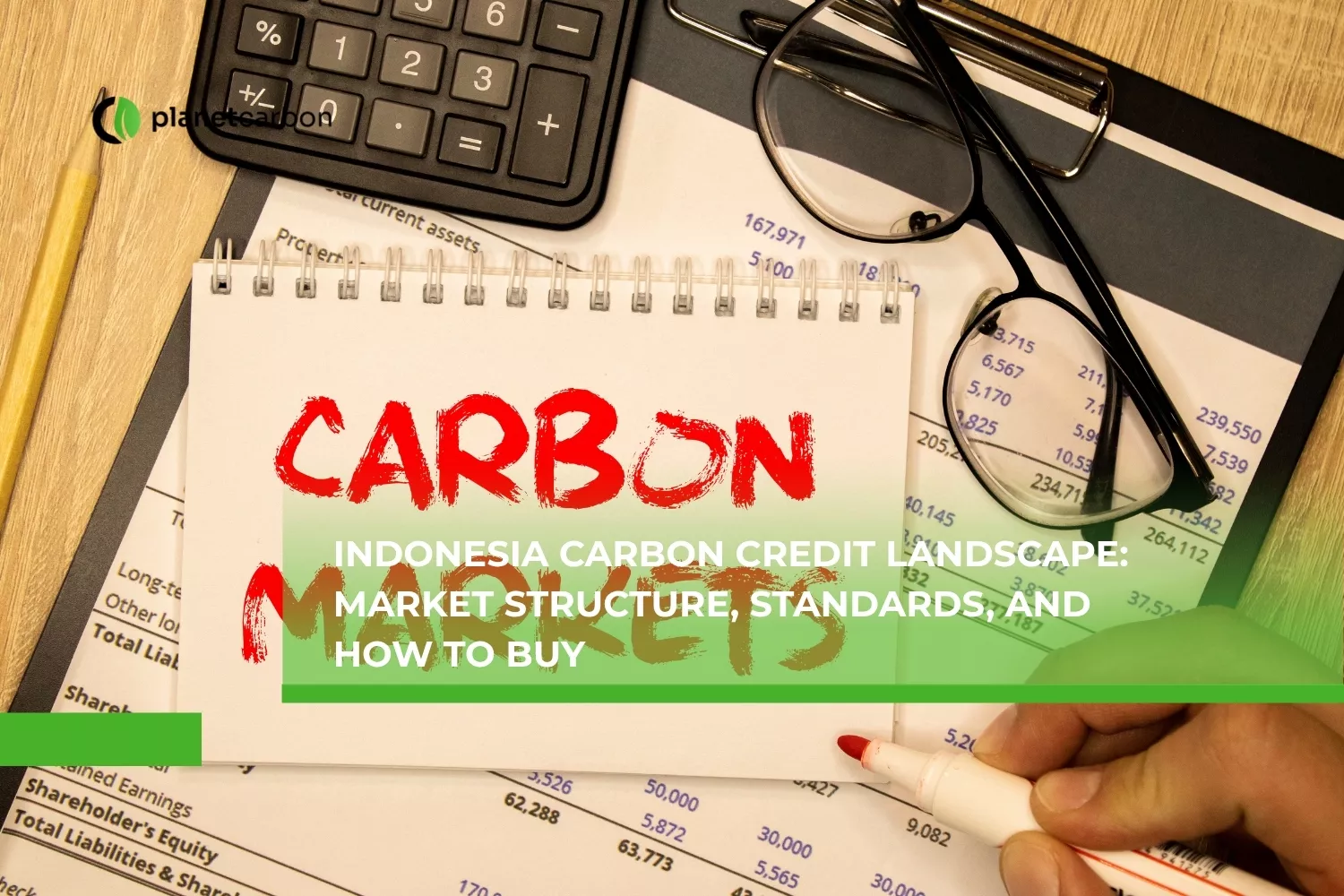
For corporate buyers and carbon market traders, one of the most persistent frustrations is not knowing how Indonesia’s carbon market is actually structured. Without a clear picture of how the mandatory and voluntary tracks differ, buyers are essentially navigating a market without a map.
The problem runs deeper than confusion alone. Many organizations end up purchasing credits through the wrong channel or under standards that fail independent verification or attract public scrutiny, exposing them to greenwashing accusations rather than protecting them from it.
Understanding the underlying market structure is the first step toward making smarter procurement decisions. This article breaks down how Indonesia’s carbon market is organized, how different market segments compare, and how buyers and traders can go about purchasing credits with confidence.
Overview of Indonesia’s Carbon Market
Indonesia operates two distinct carbon market structures, each with its own rules, participants, and price dynamics. Knowing how these two tracks differ is essential before you can meaningfully interpret any price data you encounter.
1. The Mandatory Carbon Market (IDXCarbon and SPEI)
Indonesia launched its mandatory carbon market framework under the Nilai Ekonomi Karbon (NEK) regulation, which established the carbon trading mechanism known as SPEI (Sistem Perdagangan Emisi Indonesia). Trading is facilitated through IDXCarbon, the country’s official carbon exchange operated under the Indonesia Stock Exchange.
Participation in this market is currently mandatory for coal-fired power plants (PLTUs) above a certain emissions threshold, with plans to expand to other high-emitting sectors. Companies that exceed their allocated emissions cap must purchase carbon credits to remain compliant, creating a baseline level of demand within the regulated market.
2. The Voluntary Carbon Market (VCM) in Indonesia
The voluntary carbon market (VCM) in Indonesia operates alongside the mandatory system but follows a different set of rules. Corporations, financial institutions, and multinationals purchase credits here to meet their own net-zero or ESG targets, not because they are legally required to do so.
Indonesia is home to some of the world’s most significant carbon project types in this space, including REDD+ (forest protection), blue carbon (mangrove and seagrass restoration), renewable energy, and increasingly, biochar carbon removal. Credits from these projects are typically verified under internationally recognized standards, giving buyers confidence in their environmental integrity and co-benefit credentials.
Read Also : Understanding the Carbon Credit Marketplace: How It Works, Key Players, and Investment Opportunities
How to Buy Carbon Credits in Indonesia: Channels and Considerations
Procuring carbon credits in Indonesia involves navigating multiple channels, each with its own access requirements, price dynamics, and due diligence considerations. The right channel depends on your compliance obligations, budget, and the quality standards you need to meet.
1. Buying Through IDXCarbon
IDXCarbon is the official exchange for mandatory market participants in Indonesia and is accessible to registered entities under the NEK framework. The platform operates similarly to a securities exchange, with listed credits available for purchase.
For companies with mandatory compliance obligations under SPEI, IDXCarbon is the primary channel. The exchange is transparent in its operations, but the range of credit types available remains limited compared to the voluntary market, which still reflects the current thin liquidity of a market that is not yet fully developed.
2. Buying Directly from Project Developers
Direct procurement from project developers is the most common route in the voluntary carbon market in Indonesia. This approach allows buyers to conduct thorough due diligence on the project itself, negotiate pricing and delivery terms, and build direct relationships with the teams responsible for generating the credits.
The trade-off is that direct procurement requires more internal capacity to evaluate project quality. Buyers need to assess the developer’s MRV process, the vintage of the credits, and the verification status before committing. For organizations making material sustainability claims, this due diligence is not optional.
3. Through Brokers or Aggregator Platforms
Carbon brokers and digital aggregator platforms offer access to a curated selection of credits from multiple project types and geographies, which can be convenient for buyers who want optionality without managing multiple developer relationships. Some platforms also provide analytical tools to help buyers compare credits across methodology, standard, and price.
The key consideration with broker-mediated purchases is transparency about the chain of custody and the markup embedded in the broker’s margin. Sophisticated buyers typically request the project documentation and registry serial numbers to verify that the credits they are purchasing have not already been retired or sold to another party.
Biochar as a High-Quality Carbon Credit Category in Indonesia
Biochar carbon removal represents one of the most compelling opportunities in Indonesia’s voluntary carbon market, both for project developers and for buyers seeking durable, high-integrity credits. The combination of Indonesia’s abundant agricultural biomass and the growing buyer demand for removal-based credits creates a strong structural case for biochar as a premium credit category.
1. Why Biochar Produces High-Quality Credits
Unlike avoidance-based credits, biochar credits represent carbon that has been physically removed from the atmosphere and locked into a stable solid form with a half-life measured in centuries. This durability is increasingly valued by corporate buyers who need to demonstrate genuine climate impact rather than simply offsetting ongoing emissions.
Biochar carbon credits are also measurable at a high level of precision because the carbon content of the biochar itself can be directly tested and quantified. This removes one of the key sources of uncertainty that plagues forest-based credits, where carbon stock estimates depend on remote sensing and modeling assumptions.
2. Added Value from Agricultural Biomass Waste
In Indonesia, biochar projects have an additional advantage: the feedstock is largely available as agricultural waste. Rice husks, palm shell waste, sugarcane bagasse, and coconut shells are generated in massive quantities across the archipelago and often burned openly or left to decompose, releasing their stored carbon back into the atmosphere.
Redirecting this biomass into biochar production creates a double benefit. It prevents the emissions that would have resulted from decomposition or open burning, and it locks the carbon into a stable form. This co-benefit is increasingly recognized in methodologies and can contribute to price premiums for credits generated from agricultural biomass feedstocks.
3. Standards and Recognized Biochar Methodologies
Biochar carbon removal credits in the voluntary market are currently verified under a small number of internationally recognized methodologies, covering both feedstock and process quality assurance as well as carbon removal-specific standards.
In the Indonesian context, projects that align with these internationally recognized standards are better positioned to access cross-border buyers. As the methodology landscape matures, standardization will likely reduce verification costs and improve market access for smaller-scale producers.
Contact Planet Carbon for Biomass Supply Partnerships
If you are developing a biochar carbon project in Indonesia or looking to understand how biomass supply chains connect to verified carbon credit production, the team at Planet Carbon is well-placed to help you think through the logistics and economics.
Planet Carbon works across the full value chain, from biomass sourcing and feedstock validation through to project development and commercialization. If you are exploring how agricultural waste streams in your region could form the foundation of a high-quality biochar carbon removal project, a conversation with the Planet Carbon team is a practical next step.
Reach out through planetcarbon.earth to discuss your project context, biomass availability, or procurement requirements. The team works with project developers, landowners, agribusinesses, and corporate buyers, so whether you are on the supply side or the demand side of the market, there is likely a conversation worth having.
Referensi:
- IDXCarbon (Indonesia Stock Exchange Carbon Exchange): Carbon exchange launch and trading mechanism data – https://idxcarbon.co.id
- Government of Indonesia, Presidential Regulation No. 110 of 2025: National carbon economic value instruments and greenhouse gas emission control framework – https://peraturan.go.id/id/perpres-no-110-tahun-2025
- International Carbon Action Partnership (ICAP): Indonesia Emissions Trading Scheme profile and regulatory status – https://icapcarbonaction.com/en/ets/indonesian-economic-value-carbon-nilai-ekonomi-karbon-trading-scheme