
Palm oil plantation companies in Indonesia face mounting pressure from two directions at once: tightening domestic sustainability regulations and increasingly strict international market requirements. Meeting ISPO RSPO waste management palm oil obligations demands significant operational adjustments, yet many companies still treat these requirements purely as a cost center rather than a strategic asset. This disconnect is becoming harder to sustain as regulatory timelines tighten and buyer scrutiny deepens.
The volume of biomass waste generated across the palm oil supply chain is staggering. Empty fruit bunches (EFB), palm kernel shells, and mill effluent are produced in enormous quantities every harvest cycle, and improper handling not only risks certification non-compliance but also generates methane emissions that directly undermine any ESG or net-zero claim the company is trying to build.
There is a more productive way to approach this. Companies that align their ISPO and RSPO waste management practices with carbon removal technologies, particularly biochar production from biomass residues, can convert mandatory compliance activities into a verified carbon revenue stream, while simultaneously strengthening their position with buyers, investors, and regulators.
Understanding ISPO and RSPO: Two Standards, One Sustainability Goal
Both ISPO and RSPO were developed in response to the same fundamental problem: the palm oil sector’s environmental and social footprint needed to be accountable to a credible external framework. While they differ significantly in their legal status and governance structure, the two standards share overlapping sustainability objectives that make it possible, and increasingly necessary, to pursue them together.
1. ISPO: A Legal Obligation Applying Across All Indonesian Plantations
ISPO, or the Indonesian Sustainable Palm Oil standard, is a mandatory government certification scheme that applies to all palm oil plantation companies and smallholders operating within Indonesian territory. It was established under the Ministry of Agriculture and has gone through several revisions, with its current iteration placing stronger emphasis on greenhouse gas emissions, land use legality, and supply chain traceability.
Unlike voluntary programs, ISPO carries legal consequences for non-compliance. Companies that fail to obtain or maintain their certification risk losing operating permits, facing export restrictions, or being excluded from government procurement and financing programs.
The scope of ISPO covers everything from land clearing practices and labor standards to water management and, critically for this discussion, biomass waste handling. Plantation companies must demonstrate that solid and liquid wastes from mill operations are managed in ways that do not cause environmental harm or generate uncontrolled greenhouse gas emissions.
2. RSPO: A Voluntary, Market-Based Standard Recognized by Global Buyers
The Roundtable on Sustainable Palm Oil, or RSPO, operates as a multi-stakeholder membership organization whose certification scheme is recognized by major consumer goods companies, retailers, and investors in European, North American, and increasingly Asian markets. RSPO certification is technically voluntary, but in practice it is a de facto market access requirement for companies exporting to buyers with sustainability commitments.
RSPO’s Principles and Criteria (P&C) are regularly updated, with the 2018 revision substantially tightening requirements around deforestation, peatland development, and waste management. Companies certified under RSPO must maintain detailed documentation across all supply chain touchpoints and submit to periodic audits by an accredited independent verification body.
The market signal here is clear. Major fast-moving consumer goods companies and financial institutions are increasingly using RSPO certification status as a screening criterion for procurement and investment decisions, making it a strategic business priority beyond mere compliance.
3. Where ISPO and RSPO Converge on Palm Oil Waste
Both standards independently arrive at similar requirements when it comes to biomass waste: it must be handled responsibly, its environmental impact must be documented, and practices that generate unnecessary emissions must be phased out. This convergence is significant because it means companies managing waste in alignment with one standard are already partway toward satisfying the other.
The most directly relevant area of overlap is the prohibition or discouragement of open burning and uncontrolled decomposition of organic waste, both of which produce methane and carbon dioxide in ways that are increasingly incompatible with either standard’s emissions-related criteria. A well-designed waste management system that satisfies ISPO’s mandatory requirements can therefore be structured to simultaneously fulfill RSPO’s voluntary but market-enforced expectations.
Palm Oil Biomass Waste: Potential Long Viewed as a Problem
The palm oil industry produces one of the largest volumes of agricultural biomass waste of any crop sector in the world, and for decades this residue was managed through the path of least resistance: burning, ponding, or field dumping. Understanding what is actually being generated, and why legacy approaches are no longer viable, is the first step toward unlocking the real economic potential sitting inside every mill’s waste stream.
1. Types and Volumes of Palm Oil Biomass Waste Generated
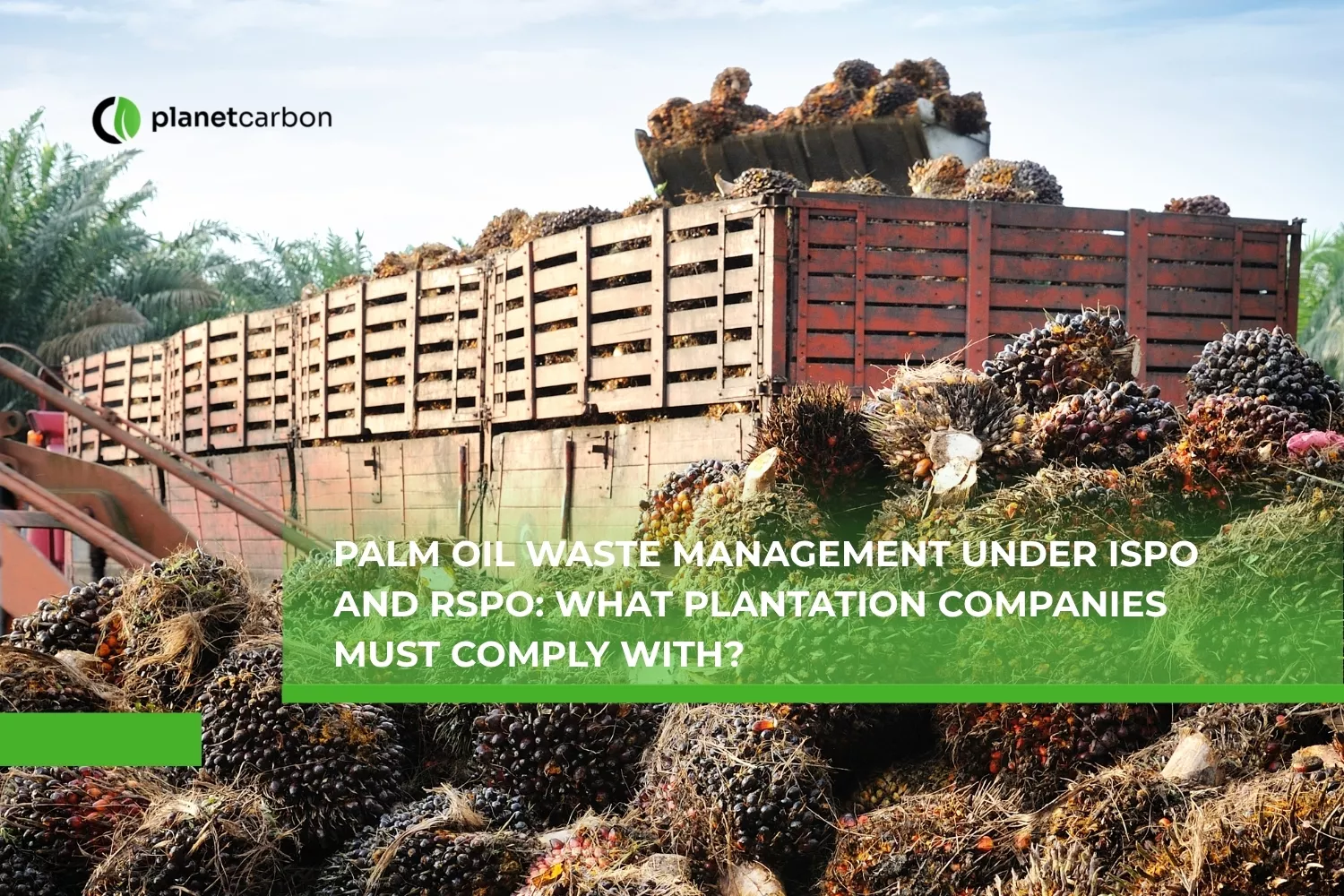
A single palm oil mill processing 60,000 tonnes of fresh fruit bunches (FFB) annually generates roughly 22,000 tonnes of empty fruit bunches, 12,000 tonnes of palm kernel shells, and upward of 600,000 cubic meters of palm oil mill effluent (POME). These figures are not edge cases but represent typical mid-sized operations in Indonesia, where the country hosts approximately 16 million hectares of palm oil plantation area as of the most recent official estimates from the Ministry of Agriculture.
EFB alone constitutes around 23% of the FFB input weight, making it the single largest solid residue stream from milling operations. Palm kernel shells and fiber also accumulate in significant quantities, while POME, if left untreated in open lagoons, is one of the sector’s most significant sources of methane emissions.
Across Indonesia’s roughly 1,800 registered palm oil mills, the cumulative waste volume represents tens of millions of tonnes of biomass generated annually. This material contains substantial carbon content, calorific value, and soil amendment potential, all of which remain entirely untapped under conventional disposal practices.
2. Why Burning and Neglect Are No Longer Options
Open burning of EFB and other biomass residues was once widespread in the sector as a rapid disposal method. It is now prohibited under Indonesian environmental law and explicitly discouraged under both ISPO and RSPO criteria, not only because of its direct air quality impact but because it produces black carbon emissions and eliminates any possibility of carbon credit generation from the waste stream.
POME lagoon management is an equally urgent issue. When untreated effluent decomposes anaerobically in open ponds, it releases methane at a global warming potential approximately 28 times higher than carbon dioxide over a 100-year period, according to the Intergovernmental Panel on Climate Change (IPCC). For companies trying to build credible ESG disclosures or meet Science Based Targets initiative (SBTi) commitments, uncontrolled POME emissions are a material liability.
Regulators and auditors are also becoming more technically sophisticated in their assessments. Submitting documentation that relies on outdated waste disposal practices no longer satisfies the evidentiary standard expected at ISPO or RSPO audits, and gap findings in this area are increasingly flagged as major nonconformities rather than minor observations.
3. Hidden Economic Value in Converted Waste
Biomass waste, when properly processed, ceases to be a cost item and becomes a feedstock for value creation. EFB has a carbon content of approximately 40 to 45 percent on a dry weight basis, making it a suitable raw material for biochar production through pyrolysis. Palm kernel shells similarly carry high energy density and carbon content.
The economic opportunity lies in the fact that converting these waste streams into biochar not only resolves the disposal problem but also creates a stable, carbon-rich material that qualifies for carbon credit issuance under recognized international carbon certification standards. A tonne of biochar produced from biomass residues can sequester carbon in a form that persists in soil for centuries, a durability profile that commands premium pricing in voluntary carbon markets.
Beyond carbon credit revenue, biochar application to plantation soils has been shown in multiple agronomic studies to improve water retention, reduce fertilizer leaching, and support soil organic matter recovery, delivering input cost savings that compound over multiple growing cycles. This means the same operational decision that resolves a compliance problem simultaneously creates a revenue line and reduces variable costs.
Read Also : The Scientific Difference Between Biochar and Regular Charcoal
Palm Oil Waste Management in Compliance with ISPO and RSPO
Compliance with waste management criteria under ISPO and RSPO is not a one-time checklist exercise. It requires systematic operational integration, documented evidence trails, and in many cases, infrastructure investment that needs to be planned well in advance of audit cycles. The specific requirements under each standard differ in emphasis and structure, but taken together they define a clear direction for how modern palm oil operations should be managing their biomass output.
1. Solid Waste Management Requirements Under ISPO
Under ISPO’s criteria, plantation companies and mills are required to implement a waste management system that accounts for all categories of solid and liquid waste generated. For solid biomass such as EFB and fiber, this means identifying disposal or utilization pathways that do not involve open burning and do not result in uncontrolled anaerobic decomposition in field dumps.
ISPO auditors expect to see written waste management procedures, evidence of their implementation, and records showing the quantities of waste generated, managed, and disposed of during each assessment period. Companies that cannot produce this documentation risk major nonconformity findings that jeopardize certification renewal.
The standard also increasingly requires companies to quantify their greenhouse gas emissions profile, including emissions attributable to waste mismanagement. This creates a direct audit linkage between waste handling practices and the overall emissions performance that ISPO now evaluates as part of its sustainability scorecard.
2. Waste and Emissions Management Requirements Under RSPO
RSPO’s Principles and Criteria place explicit requirements on both solid waste handling and effluent management. Under Criterion 4.4, companies must demonstrate that waste is managed in ways that prevent environmental pollution, while Criterion 5.1 requires the identification and assessment of all significant environmental impacts, including those arising from waste streams.
RSPO additionally requires POME to be managed through treatment systems that capture and either utilize or safely dispose of biogas, directly targeting the methane emissions associated with open lagoon decomposition. Companies that have not yet invested in POME biogas capture infrastructure are increasingly at risk of major nonconformity findings under current audit standards.
Critically, RSPO certification audits are conducted by an accredited independent verification body, and the documentation expectations have become substantially more rigorous following the 2018 P&C revision. Auditors are now expected to cross-check field practices against documented procedures, which means paper compliance without operational reality is no longer a viable strategy.
3. Gap Analysis: Where Most Plantations Still Fall Short
The most common compliance gaps identified during ISPO and RSPO pre-audit assessments cluster around three areas: incomplete waste quantity records, absence of documented utilization pathways for EFB, and lack of a systematic POME treatment process. Many mid-sized operations have informal waste handling practices that were tolerated under older audit standards but are now clearly inadequate.
A secondary gap category involves emissions accounting. Companies that have not established baseline measurements of their waste-related greenhouse gas emissions are unable to demonstrate improvement over time, which undermines their ability to make credible ESG disclosures or respond to buyer questionnaires that increasingly ask for scope 1 and scope 3 emissions data.
Addressing these gaps requires more than updating documentation templates. It requires choosing waste management approaches that are technically auditable, generate verifiable data, and are scalable across all mill operations within a corporate group. Biochar production from EFB and other biomass residues is increasingly recognized as one of the few approaches that simultaneously satisfies all three of these requirements.
Biochar as a Strategic ISPO- and RSPO-Compliant Waste Management Solution
Biochar production from palm oil biomass waste is not an experimental or niche solution. It is a technically mature, commercially deployable process that has been validated across multiple jurisdictions and feedstock types, with a growing body of agronomic and carbon accounting literature supporting its application in plantation contexts. For companies already required to improve their waste management performance under ISPO RSPO waste management palm oil obligations, biochar offers a pathway that satisfies regulatory requirements and generates measurable financial returns.
1. The Biochar Process: From EFB Waste to Stored Carbon
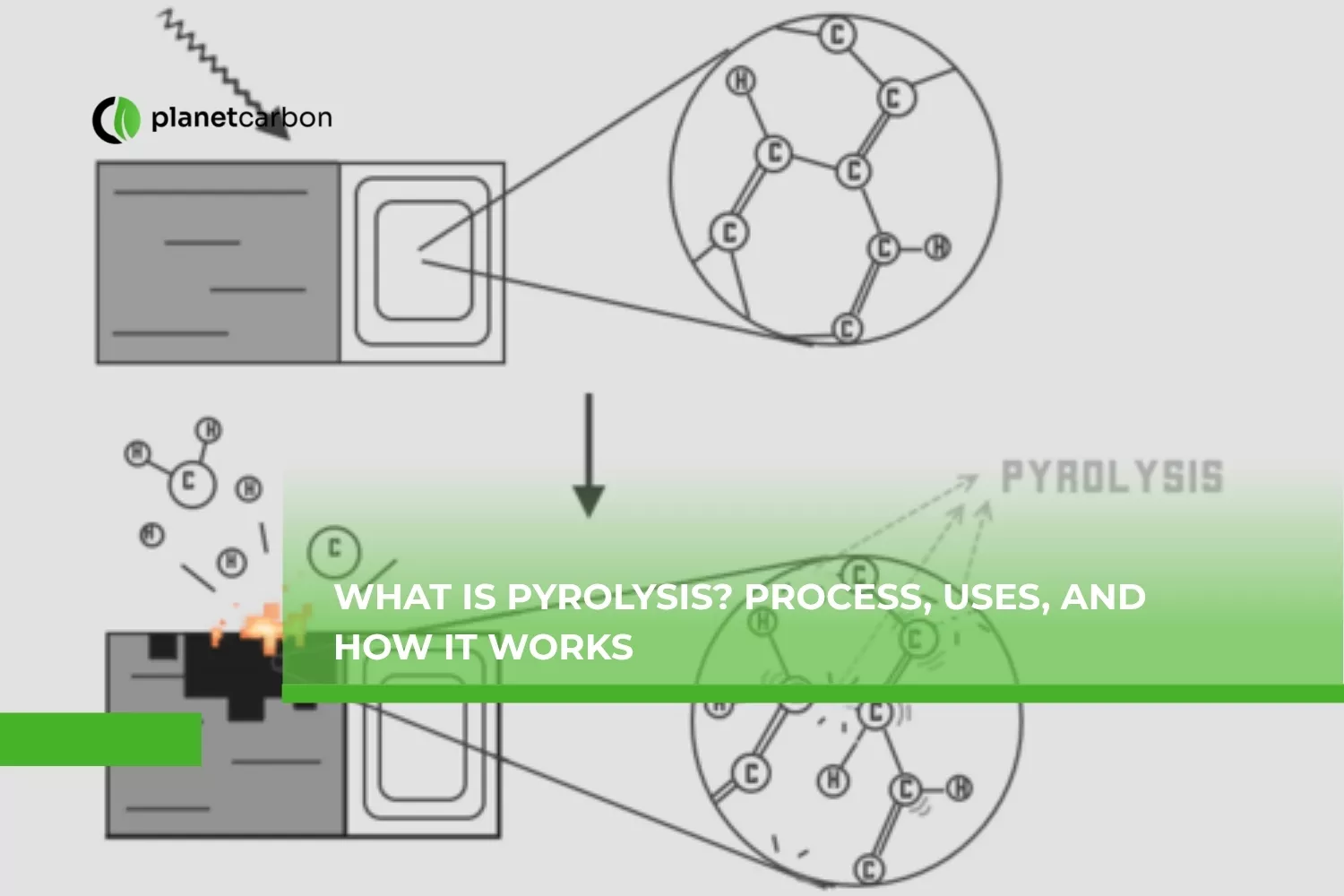
Biochar is produced through pyrolysis, a thermochemical conversion process in which biomass is heated to temperatures between 300 and 700 degrees Celsius in a low-oxygen or oxygen-free environment. Under these conditions, the organic material in EFB, palm kernel shells, or other biomass residues is converted into a stable, porous carbon structure rather than being combusted and released as carbon dioxide.
The resulting material, biochar, retains approximately 50 to 80 percent of the carbon originally present in the feedstock in a recalcitrant form that resists biological decomposition for hundreds to thousands of years. This durability characteristic is central to its value as a carbon removal mechanism, because it moves carbon from the fast biological cycle into long-term geological storage, effectively achieving the same permanence objective as deep geological sequestration but at a fraction of the cost and with immediate co-benefits for agricultural soils.
The process is energy-generating as well as carbon-storing. Pyrolysis produces syngas as a byproduct, which can be captured and used to generate process heat or electricity, reducing the mill’s dependence on fossil fuel or grid energy inputs. This energy recovery dimension further improves the overall economics of a biochar facility integrated with an existing palm oil mill.
2. How Biochar Meets ISPO and RSPO Requirements at Once
When a plantation company processes its EFB through a pyrolysis unit rather than disposing of it through open dumping or incineration, it immediately satisfies the documented utilization pathway requirement that both ISPO and RSPO auditors expect to see. The biochar production process creates a clear, quantifiable, and technically defensible record of how solid biomass waste was handled, which directly addresses the most common gap finding in waste management audits.
From an emissions perspective, pyrolysis of EFB produces a fraction of the greenhouse gas emissions that would result from open-field decomposition, and because the process operates in low-oxygen conditions, it does not generate the black carbon and particulate emissions associated with open burning. This allows companies to demonstrate measurable emissions reduction from their waste stream, a data point that strengthens both ISPO sustainability scorecards and RSPO environmental impact assessments.
The biochar product itself, when applied to plantation soils, contributes to soil carbon improvement, which is an indicator tracked under both standards’ land management criteria. A single operational decision, converting EFB to biochar and applying it to fields, therefore generates compliance evidence across waste management, emissions performance, and soil health criteria simultaneously.
3. MRV Integration: Turning Certification Compliance into a Carbon Asset
MRV, which stands for Measurement, Reporting, and Verification, is the technical backbone of any credible carbon credit claim. For palm oil biomass waste carbon credit to be issued against a biochar project, the company must demonstrate that the carbon sequestered in biochar is accurately measured, transparently reported, and independently verified against a recognized international carbon certification standard.
The data collection infrastructure required for MRV, including feedstock weight tracking, process temperature and residence time monitoring, biochar yield measurement, and application records, substantially overlaps with the operational documentation already required by ISPO and RSPO audits. Companies that build their waste management system with MRV integration from the outset are therefore not adding a separate compliance burden. They are creating a unified data system that serves both certification and carbon credit purposes.
Once verified by an accredited independent verification body against a recognized international carbon certification standard, the carbon removal achieved by the biochar project can be registered on a publicly auditable carbon registry and traded through appropriate market channels. This transforms what was previously a pure compliance cost into a recurring revenue stream, with the MRV documentation simultaneously serving as audit evidence for both ISPO and RSPO renewals.
4. Indonesia’s Carbon Regulatory Framework: Presidential Regulation 110/2025
Indonesia’s carbon market operates under a legal framework that has been substantially updated and strengthened. Presidential Regulation No. 110 of 2025 (Perpres 110/2025), which replaced the earlier Perpres 98/2021, establishes the current governance structure for Indonesia’s National Carbon Economic Value (NEK) mechanism, including rules for carbon unit issuance, trading, and retirement.
Under Perpres 110/2025, carbon credits generated from eligible activities within Indonesia, including biomass waste conversion projects in the agricultural sector, must be registered and traded through mechanisms that comply with national regulatory requirements. This means that a biochar project at an Indonesian palm oil mill must be structured from the outset to align with both the international certification standard required by voluntary carbon market buyers and the domestic regulatory framework governing carbon unit issuance.
For biochar biomass palm oil Indonesia projects specifically, this dual compliance requirement creates an important design consideration. Project developers need to ensure that their MRV methodology is accepted under a recognized international carbon certification standard while simultaneously meeting the reporting and registration requirements established by Perpres 110/2025. Working with an experienced integrated platform that understands both dimensions of this regulatory environment significantly reduces the risk of project rejection or credit invalidation at a later stage.
Consult Your Palm Oil Biochar Project with Planet Carbon
If your company is currently navigating ISPO or RSPO audit cycles and looking for a waste management approach that does more than satisfy the minimum checkbox, ISPO RSPO waste management palm oil compliance through biochar is worth a serious operational conversation. The infrastructure investment, MRV design, and carbon credit structuring all need to be aligned from the beginning to avoid costly redesigns later.
Planet Carbon is an Integrated Carbon Solutions Platform built specifically for projects like this. The team works across the full development lifecycle, from initial feasibility and project development through validation, MRV integration, and commercialization, with deep experience in biochar projects within the Indonesian regulatory and market context.
If you are at the stage of evaluating whether your biomass waste volumes and mill configuration are suitable for a biochar carbon credit project, or if you want to understand how a biochar system would map against your current ISPO or RSPO audit requirements, the Planet Carbon team is available to work through the specifics with you. There is no generic template here because every mill configuration, waste volume profile, and certification status is different. Reaching out to discuss your situation is the most practical first step toward understanding what is actually achievable for your operation.
You can connect with the Planet Carbon team through planetcarbon.earth to schedule a project discussion at a time that works for your team.
Referensi:
- Ministry of Agriculture of Indonesia: Estimated palm oil plantation area data, approximately 16 million hectares as of recent official estimates. Refer to Direktorat Jenderal Perkebunan, Kementerian Pertanian Republik Indonesia publications.
- Intergovernmental Panel on Climate Change (IPCC): Global warming potential of methane at approximately 28 times that of carbon dioxide over a 100-year period, from IPCC Fifth Assessment Report (AR5), Working Group I, Chapter 8. https://www.ipcc.ch/report/ar5/wg1/
- IPCC and biomass carbon content references: EFB carbon content range of 40 to 45 percent on dry weight basis is consistent with values reported in peer-reviewed literature on palm oil biomass characterization, including studies referenced in IPCC agriculture and forestry working papers.
- Presidential Regulation No. 110 of 2025 (Perpres 110/2025) on the Economic Value of Carbon (NEK): https://peraturan.go.id/id/perpres-no-110-tahun-2025
- Science Based Targets initiative (SBTi): Corporate net-zero standard and sector-specific guidance. https://sciencebasedtargets.org/
- Integrity Council for the Voluntary Carbon Market (ICVCM), Core Carbon Principles (CCP): Framework for high-integrity carbon credit standards. https://icvcm.org/
- GHG Protocol: Greenhouse gas accounting and reporting standards for corporate and project-level emissions. https://ghgprotocol.org/
Read Also : Turning Rice Husks into Biochar: Land Benefits, Carbon, and Business Opportunities