

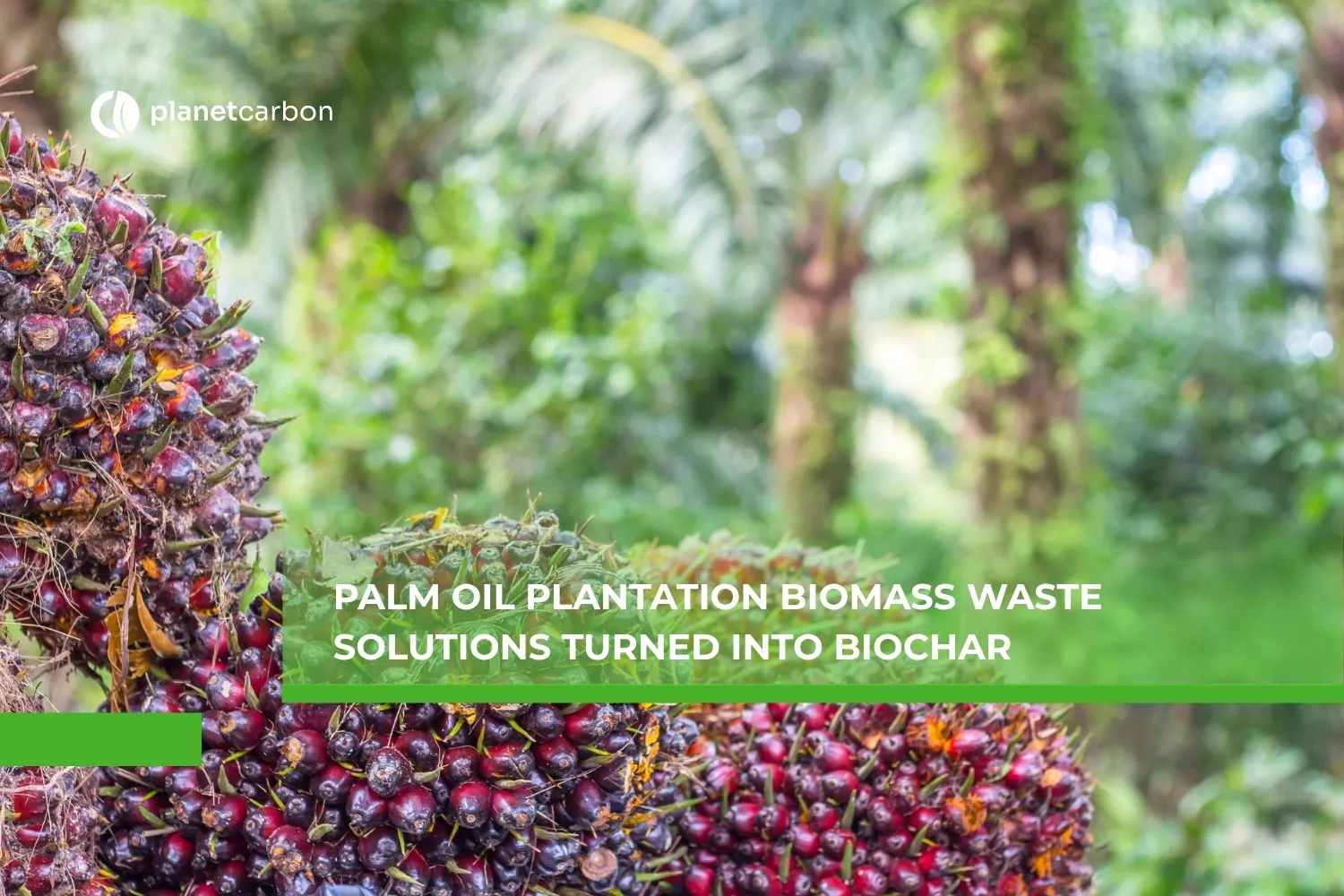
Every year, Indonesia’s palm oil industry generates over 100 million tons of biomass waste, including empty fruit bunches (EFB), palm fronds, and mill effluent (POME). Most of this waste is either burned openly, left to decompose in the field, or dumped in ways that release significant methane and CO₂ into the atmosphere. For plantations and agribusinesses facing tightening ESG requirements, this unmanaged waste is no longer just an operational headache but an escalating liability.
Regulators, institutional investors, and global commodity buyers are raising the bar on emissions accountability across agricultural supply chains. Open burning of EFB, for instance, was officially banned in Indonesia under Ministry of Agriculture Regulation No. 47/2006, yet field decomposition still contributes substantially to greenhouse gas emissions. Plantations that have not implemented a structured biomass waste management system risk losing access to premium export markets, ESG-linked financing, and future carbon trading incentives.
Palm oil plantation biomass waste solutions turned into biochar offer a credible, scalable path forward. By converting organic waste through pyrolysis into stable biochar, plantations can permanently sequester carbon, improve soil health, and generate verified carbon credits that can be commercialized on the voluntary carbon market. This is no longer experimental technology; it is a proven carbon removal strategy with measurable financial and environmental returns.
What is Biochar and Why is it Relevant for Palm Oil Plantations?
Biochar is a carbon-rich solid material produced when organic biomass is heated at high temperatures in a low-oxygen environment, a thermal conversion process known as pyrolysis. Unlike open burning or field decomposition, pyrolysis transforms unstable organic carbon into a chemically stable form that resists biological breakdown for hundreds to thousands of years.
For palm oil plantations, this relevance is direct and practical. EFB, palm fronds, and other mill residues that would otherwise release greenhouse gases during decomposition can instead become the feedstock for biochar production, converting a waste stream into a durable carbon sink and a marketable soil amendment.
The scale of opportunity in Indonesia’s palm oil sector is significant. With roughly 16.8 million hectares under cultivation as of 2022 and mills producing hundreds of thousands of tons of EFB annually, the sector holds some of the largest untapped biochar feedstock potential in Southeast Asia. Addressing this at the plantation level is where palm oil biomass waste biochar strategies begin to show real commercial logic.
Agronomic Benefits of Biochar for Palm Oil Plantation Land
Beyond carbon sequestration, biochar delivers a range of direct agronomic benefits that can improve the productivity and long-term resilience of palm oil plantation soils. These benefits are especially relevant in tropical contexts where soil degradation, acidity, and nutrient leaching are persistent operational challenges.
Each of the following dimensions reflects a specific mechanism through which biochar application translates into measurable improvements at the field level.
1. Increasing Soil Cation Exchange Capacity (CEC)
Biochar’s highly porous structure significantly increases a soil’s cation exchange capacity, which is the soil’s ability to retain and supply positively charged nutrients such as calcium, magnesium, and potassium. Higher CEC means fertilizers stay available to plant roots longer rather than washing out with rainfall, reducing nutrient losses and improving fertilizer use efficiency.
For palm oil plantations operating on highly weathered, low-CEC soils common across Sumatra and Kalimantan, this translates directly into lower input costs over time. Trials conducted on tropical plantation soils have shown CEC improvements of 20 to 40 percent following biochar application at rates of 5 to 20 tonnes per hectare.
2. Water Retention and Irrigation Efficiency
Biochar’s microporous architecture allows it to absorb and hold significantly more water than untreated soil, reducing moisture stress on palms during dry seasons. This is particularly relevant for rainfed plantations in regions where precipitation variability is increasing due to climate change.
Improved water retention also reduces surface runoff and topsoil erosion, protecting the long-term productive capacity of plantation land. In water-intensive palm oil production systems, this benefit compounds over multiple growing cycles, contributing to more stable yields under variable rainfall conditions.
3. Reducing N₂O Emissions from Land
Agricultural soils are one of the largest sources of nitrous oxide (N₂O), a greenhouse gas with a global warming potential approximately 273 times that of CO₂ over a 100-year period, according to the IPCC Sixth Assessment Report. Biochar application has been shown to inhibit the microbial processes responsible for N₂O production by altering soil aeration and nitrogen cycling dynamics.
Multiple peer-reviewed studies, including a meta-analysis published in Global Change Biology, have documented average N₂O emission reductions of around 38 percent from biochar-amended soils compared to unamended controls. For a palm oil plantation already working toward a lower-emission footprint, this represents an additional emissions reduction pathway beyond the sequestration value of the biochar itself.
4. Raising the pH of Acidic Soil
Tropical plantation soils in Indonesia frequently exhibit low pH levels, often falling between 4.0 and 5.5, which limits nutrient availability and constrains palm productivity. Biochar produced from high-ash feedstocks such as EFB tends to be mildly alkaline, and its application gradually raises soil pH toward the 5.5 to 6.5 range that oil palms prefer.
This liming effect can reduce or partially replace the need for conventional soil amendments such as dolomite or agricultural lime, lowering both input costs and the carbon footprint associated with lime production and transport. The agronomic and economic case for biochar therefore extends well beyond its carbon credit value.
Read Also : How to Process Palm Oil Waste into Biochar
Biochar as a Carbon Credit Instrument for Palm Oil Plantations
One of the most commercially significant aspects of biochar production from agricultural residues is its potential to generate verified carbon credits on the voluntary carbon market. For palm oil companies looking to diversify revenue while meeting sustainability commitments, this dimension warrants careful attention.
The pathway from biomass waste to tradeable carbon credit is structured around several interconnected mechanisms, each of which needs to be understood before any commercialization strategy can be designed effectively.
1. The Mechanism of Permanent Carbon Sequestration by Biochar
When biomass is converted into biochar through pyrolysis, approximately 50 to 80 percent of the original organic carbon is transformed into a recalcitrant, stable form known as pyrogenic carbon. Unlike the carbon stored in living biomass or organic matter, which can be released back into the atmosphere within years through decay or fire, pyrogenic carbon persists in soil for hundreds to thousands of years under typical environmental conditions.
This stability is what qualifies biomass waste carbon removal through biochar as a high-durability carbon dioxide removal (CDR) method. Independent studies using radiocarbon dating have confirmed mean residence times for biochar carbon in soil that exceed several centuries, making it one of the more durable land-based carbon removal approaches currently available at scale.
2. MRV Process and Validation Standards for Biochar Carbon Credits
The credibility of any biochar carbon credit depends entirely on the quality of its measurement, reporting, and verification (MRV) framework. Leading voluntary carbon market standards such as Puro.earth’s Biochar Carbon Removal Standard, the European Biochar Certificate (EBC), and Verra’s VM0044 methodology each define specific requirements for quantifying carbon yield, verifying feedstock origins, testing biochar stability, and documenting the chain of custody from production to application.
A rigorous MRV process typically includes laboratory analysis of biochar for H:Corg ratios to assess stability, documentation of pyrolysis conditions including temperature and residence time, and third-party auditing of production records and application volumes. Plantations working with a platform experienced in biochar MRV carbon credit processes can significantly reduce the time and cost of reaching first issuance.
3. Potential Economic Value of Carbon Credits from Palm Oil Biochar
Biochar carbon credits currently trade at a premium compared to many other voluntary carbon market instruments, largely because of their high durability and the verifiability of the removal mechanism. As of 2024, high-quality biochar carbon removal credits on platforms such as Puro.earth have been transacted in the range of USD 150 to over USD 300 per tonne of CO₂ equivalent, depending on certification standard, buyer requirements, and vintage.
For a palm oil mill processing 300,000 tonnes of fresh fruit bunches (FFB) annually, the EFB output alone can represent tens of thousands of tonnes of biochar-eligible feedstock, with corresponding carbon credit potential running into millions of dollars over a multi-year project cycle. These figures are project-specific and subject to feedstock quality, pyrolysis efficiency, and credit issuance rates, so any serious feasibility assessment requires site-level modeling.
4. Integration with ESG and SFDR Reporting
For palm oil companies listed on stock exchanges or backed by institutional capital, the ability to quantify and report verified carbon removals has become increasingly relevant to investor relations and regulatory compliance. The EU Sustainable Finance Disclosure Regulation (SFDR) and frameworks such as the Task Force on Climate-related Financial Disclosures (TCFD) require asset managers and large corporations to disclose and manage climate-related risks and opportunities with increasing specificity.
Verified biochar carbon credits, because they are tied to a transparent production and MRV process, can be integrated directly into sustainability reports as documented evidence of emission reductions and carbon removal activity. For palm oil ESG compliance strategies, this provides a verifiable, quantifiable metric that goes beyond narrative disclosure and satisfies the data expectations of sophisticated institutional audiences.
Implementation Challenges and How to Overcome Them
Converting the theoretical opportunity of biochar into an operational reality at the plantation level requires navigating several practical barriers. These are real challenges, but they are well-understood ones, and structured approaches have been developed to address each of them effectively.
The three most common obstacles plantations encounter when developing a biochar project are described below, along with the strategies that have proven most effective in overcoming them.
1. Initial Costs and Financing Models
Pyrolysis equipment capable of processing large volumes of agricultural biomass represents a significant capital outlay, with industrial-scale units ranging from several hundred thousand to several million US dollars depending on capacity and technology type. For many plantation operators, this upfront investment is the primary barrier to project initiation, particularly in a context where commodity margins are already under pressure.
Several financing models have emerged to address this barrier. Carbon credit prepurchase agreements and offtake contracts, where a buyer or platform commits to purchasing a defined volume of credits at a fixed price, can be structured to partially or fully fund equipment procurement. Development finance institutions and green bond instruments are also increasingly available for agricultural carbon projects in Southeast Asia, reducing the cost of capital for qualifying applicants.
2. Technical Capacity and Biomass Supply Chain
Sustaining a reliable biochar production operation requires both technical expertise in pyrolysis management and a well-organized biomass supply chain to ensure consistent feedstock availability. EFB, while abundant at the mill level, requires pre-processing such as shredding and drying to reach the moisture content levels needed for efficient pyrolysis, typically below 20 percent.
Operational training for mill staff, integration of biomass logistics into existing plantation workflows, and routine quality control of both feedstock and biochar output are all components of a functioning production system. Partnering with a platform that has built these processes into a replicable deployment model significantly reduces the learning curve and operational risk for first-time implementers.
3. Third-Party Verification Requirements
Carbon credit standards require independent third-party auditors to verify project documentation, production records, and biochar quality data before credits can be issued. For plantations without prior experience in carbon project development, assembling the required documentation and coordinating audit timelines can be a time-intensive process.
Early engagement with a carbon credit development platform that understands the specific documentation requirements of the applicable standard can compress the path to first issuance substantially. Structured project development support, including template documentation, pre-audit readiness reviews, and relationships with accredited verifiers, reduces both the administrative burden and the risk of credit invalidation due to documentation gaps.
Schedule Your Discussion with the Planet Carbon Team
If your plantation or agribusiness is evaluating how to convert biomass waste into a structured carbon removal and revenue-generating strategy, the Planet Carbon team is ready to work through the specifics with you. Palm oil plantation biomass waste solutions turned into biochar are at the core of what Planet Carbon develops, validates, and commercializes as part of its Integrated Carbon Solutions Platform.
Rather than starting from a generic template, the Planet Carbon team approaches each project from the feedstock level up, assessing your specific biomass volumes, land conditions, and commercial objectives before recommending a development pathway. This means the feasibility analysis you receive reflects your actual situation, not an averaged industry estimate.
To schedule a discussion with the Planet Carbon team and explore what a biochar project could look like for your operation, visit planetcarbon.earth. Whether you are at the early scoping stage or already evaluating specific technology options, the conversation is a practical starting point.
Referensi:
- Indonesian Ministry of Agriculture: Regulation No. 47/2006 on Guidelines for the Processing and Utilization of Palm Oil Biomass – https://peraturan.bpk.go.id
- Directorate General of Estates, Indonesian Ministry of Agriculture: Palm oil plantation area data, 16.8 million hectares under cultivation as of 2022 – https://ditjenbun.pertanian.go.id
- IPCC Sixth Assessment Report (AR6), Working Group I: Global warming potential of N₂O at 273 times CO₂ over 100 years – https://www.ipcc.ch/report/ar6/wg1/
- Cayuela, M.L. et al. (2014): “Biochar’s role in mitigating soil nitrous oxide emissions: A review and meta-analysis,” Global Change Biology Bioenergy, reporting approximately 38 percent average N₂O reduction – https://onlinelibrary.wiley.com/journal/17571707
- Puro.earth: Biochar Carbon Removal Standard and indicative transaction price ranges for biochar carbon credits (USD 150 to USD 300+ per tonne CO₂e as of 2024) – https://puro.earth
- European Biochar Certificate (EBC): Biochar quality and stability standards including H:Corg ratio methodology – https://www.european-biochar.org
- Verra: VM0044 Methodology for Biochar Utilization in Soil and Non-Soil Applications – https://verra.org/methodologies/vm0044
- Task Force on Climate-related Financial Disclosures (TCFD): Framework for climate risk and opportunity disclosure – https://www.fsb-tcfd.org
- European Commission: Sustainable Finance Disclosure Regulation (SFDR) framework – https://finance.ec.europa.eu/sustainable-finance/disclosures_en
Read Also : Sustainable Biochar-Based Solutions for Agricultural and Plantation Waste