

Agricultural waste is piling up across farms and plantations every harvest season. Rice husks, sugarcane bagasse, corn cobs, and other biomass residues often end up burned openly or left to decompose, both of which contribute directly to greenhouse gas emissions with zero economic return.
At the same time, pressure on agribusinesses to demonstrate ESG compliance is intensifying. Corporate buyers are demanding lower-emission supply chains, regulators are tightening carbon reporting requirements, and the cost of doing nothing is quietly climbing. The very biomass waste your operation produces every year could be an asset, but only if it is processed the right way.
That is where understanding biochar vs charcoal becomes genuinely important. These two products look similar on the surface, yet they serve entirely different purposes, follow different production standards, and have completely different implications for your business, your soil, and your carbon strategy.
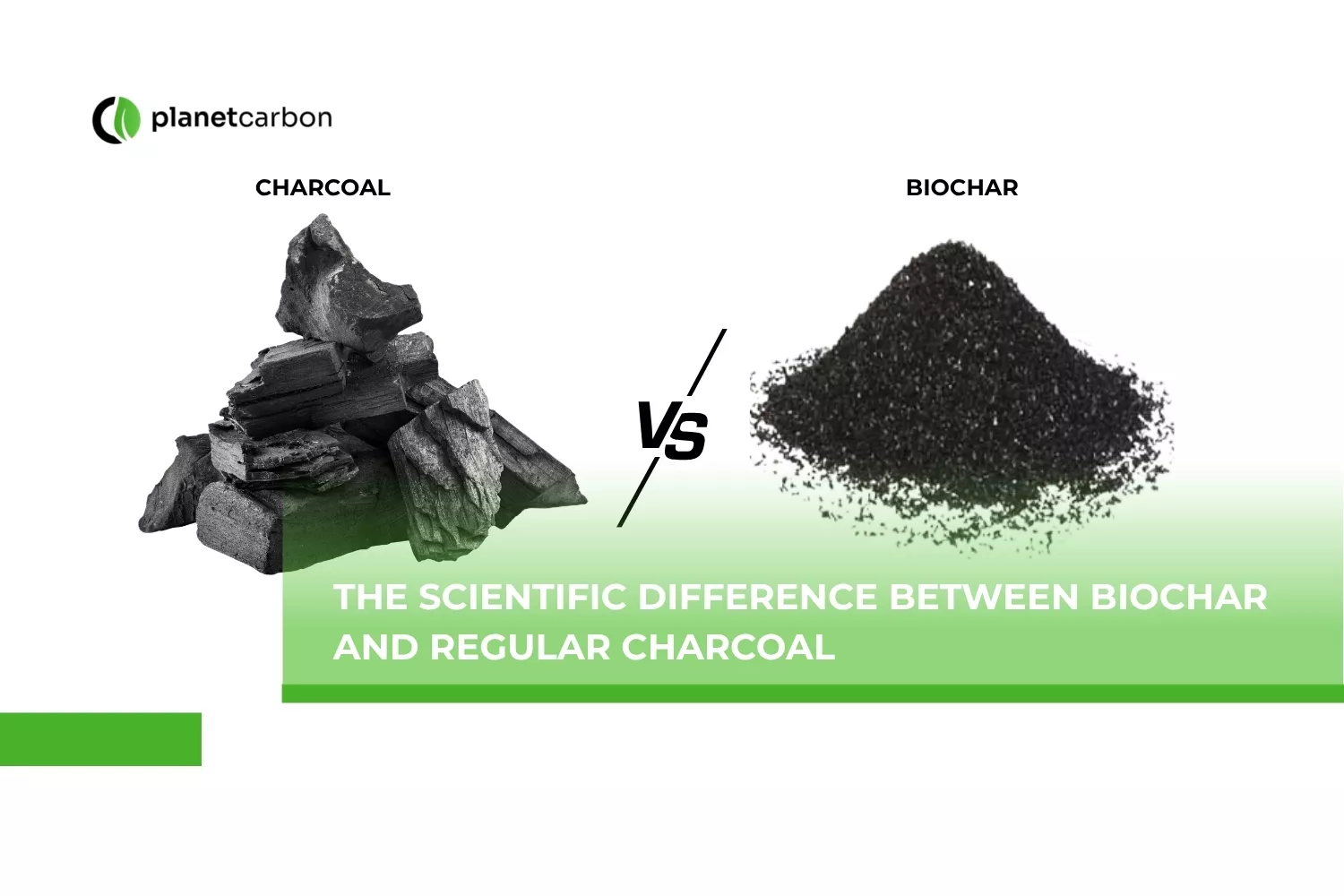
What is Biochar and How Does It Differ from Regular Charcoal?
At first glance, biochar and regular charcoal might seem like two names for the same thing. But once you look at how each is made, what it is made from, and what it is designed to do, the distinction becomes impossible to ignore.
1. Definition and Origins
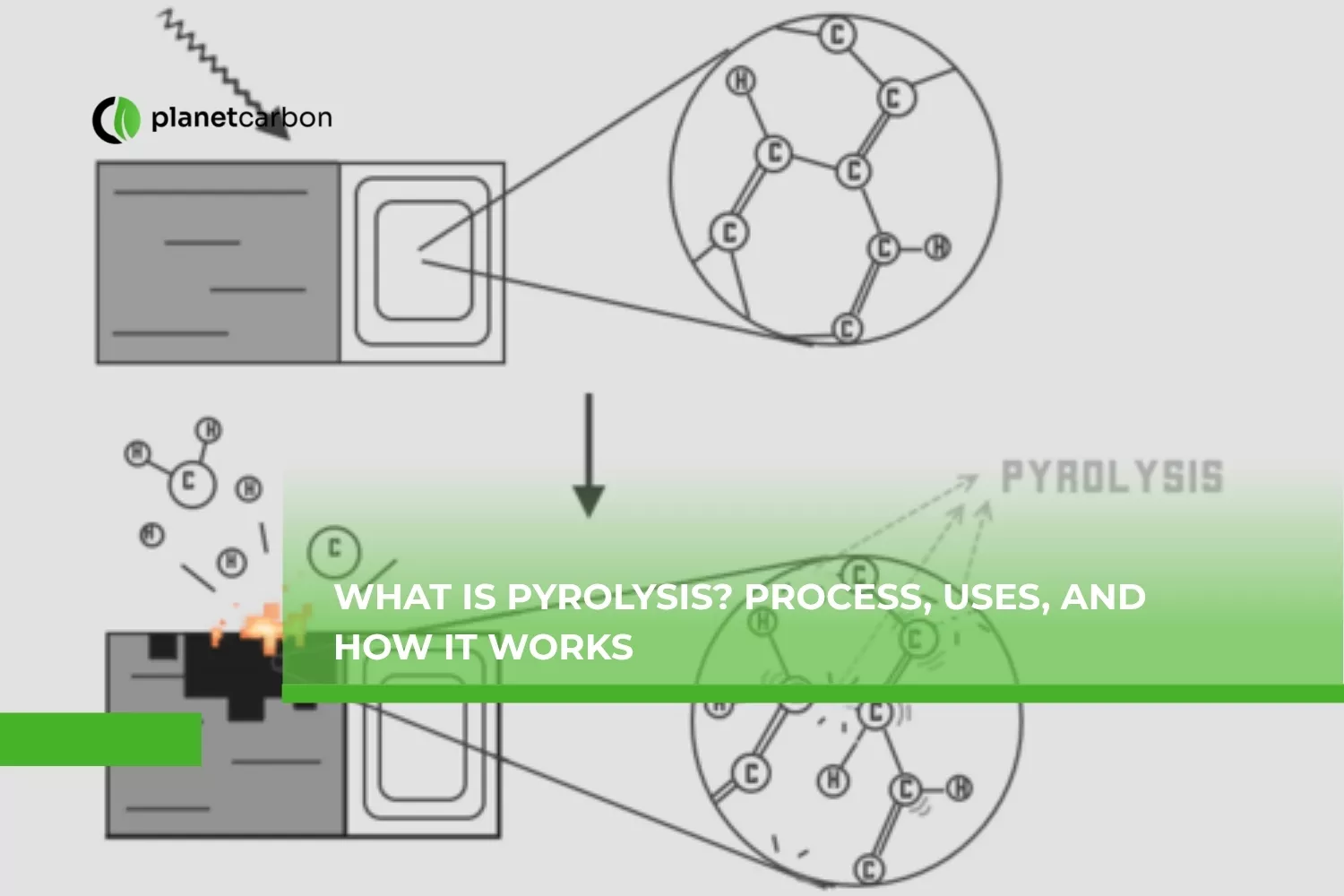
Biochar is a carbon-rich solid material produced by heating biomass in a controlled, low-oxygen environment through a process called pyrolysis. It is specifically engineered for long-term carbon storage and soil application, not for combustion.
Regular charcoal, by contrast, is produced primarily as a fuel source. Whether it is used for cooking, industrial smelting, or energy generation, its entire purpose is to be burned, which means the carbon locked inside it is released back into the atmosphere almost immediately after use.
The word “biochar” itself was formalized in scientific literature as a distinct term to separate this soil-amendment material from fuel-grade charcoal, even though both originate from a thermochemical conversion of organic matter. The International Biochar Initiative defines biochar as a solid material obtained from the thermochemical conversion of biomass in a limited-oxygen environment, with the intent of being applied to soil.
2. Differences in Production Process: Pyrolysis vs. Conventional Burning
The production method is where the two materials diverge most sharply. Biochar is produced through pyrolysis, a process that heats feedstock to temperatures typically between 350°C and 700°C in the near or complete absence of oxygen. This controlled thermal decomposition preserves the carbon structure rather than oxidizing it.
Conventional charcoal production, particularly traditional kiln burning, operates with some degree of oxygen present and is far less controlled. The result is a material with variable carbon content, inconsistent pore structure, and no standardized protocol for quality or application.
For biochar intended to qualify under recognized international carbon certification standards, pyrolysis conditions must be precisely documented. Temperature, residence time, feedstock moisture content, and cooling procedures all factor into the final product’s stability classification, which directly determines its value in carbon markets.
3. Differences in Feedstock Used
Both products can technically be made from any organic material, but the feedstock choices diverge significantly in practice. Regular charcoal production has historically relied on wood, particularly hardwoods, because of their high energy density when burned.
Biochar production, on the other hand, is well-suited for agricultural residues such as rice husks, corn cobs, coconut shells, sugarcane bagasse, and palm kernel shells. These feedstocks are abundant, often treated as waste, and carry no deforestation risk when sourced responsibly.
This difference in feedstock sourcing matters enormously for both carbon accounting and sustainability credentials. Using agricultural waste as feedstock means the carbon being sequestered was already part of the biogenic carbon cycle, so diverting it into stable biochar rather than open burning represents a genuine net reduction in atmospheric carbon.
Read Also : Understanding the Carbon Credit Marketplace: How It Works, Key Players, and Investment Opportunities
The Scientific Advantages of Biochar That Regular Charcoal Lacks
The value of biochar for agriculture and carbon markets is not just about what it is made from. It comes down to its measurable physical and chemical properties, properties that regular charcoal simply does not possess to the same degree.
1. Long-Term Carbon Stability
One of the most important characteristics of biochar is its resistance to biological and chemical decomposition. The aromatic carbon structures formed during controlled pyrolysis are highly recalcitrant, meaning they do not break down readily in soil. Studies published in peer-reviewed journals estimate that biochar can persist in soil for hundreds to thousands of years depending on production conditions and local environment.
Regular charcoal, even when not used as fuel, degrades far more quickly under field conditions. Its carbon structure is less ordered and more susceptible to microbial breakdown, which limits its effectiveness as a long-term carbon sink.
This stability is the foundation of biochar carbon sequestration as a credible carbon removal pathway. When carbon remains locked in the soil for a measurable, extended duration, it satisfies the permanence criteria required by most rigorous carbon accounting frameworks.
2. Micropore Structure and Cation Exchange Capacity
Under microscopic analysis, high-quality biochar reveals a highly porous architecture, a network of micro and macro pores inherited from the original cell structure of the biomass feedstock. This porosity is largely absent or inconsistent in fuel-grade charcoal.
These micropores perform several agronomic functions simultaneously. They create habitat for beneficial soil microorganisms, improve water retention in sandy or degraded soils, and increase the soil’s cation exchange capacity (CEC), which is the ability of soil to hold positively charged nutrient ions such as calcium, magnesium, and potassium and make them available to plant roots.
A higher CEC directly reduces nutrient leaching, meaning fertilizer inputs go further and soil fertility improves over successive growing seasons rather than declining. This is a quantifiable, commercially relevant benefit that regular charcoal cannot replicate reliably.
3. Soil pH and Impact on Productivity
Most biochar produced from agricultural residues tends to be alkaline, with pH values ranging from 7 to 10 depending on feedstock and production temperature. When applied to acidic tropical soils, which are common across much of Southeast Asia and Indonesia specifically, this liming effect can meaningfully raise soil pH toward a range more conducive to nutrient uptake.
Improving soil pH in degraded or over-acidified agricultural land can translate directly into higher crop yields and reduced reliance on synthetic lime amendments. Research from multiple tropical contexts has shown that biochar soil amendment can increase yields of staple crops by 10 to 20 percent in soils with pre-existing acidity problems, though results vary by crop type, soil condition, and application rate.
Regular charcoal, because it is not produced to agronomic specifications, delivers unpredictable pH effects and can even introduce contaminants from incomplete combustion, making it unsuitable as a soil amendment in any standardized agricultural program.
Biochar’s Relevance to the Carbon Market and ESG Compliance
Understanding biochar vs charcoal differences is not just an academic exercise for agronomists. For agribusinesses, plantations, and land managers, it has direct financial and regulatory implications that are growing more significant every year.
1. Why Biochar Qualifies as Carbon Removal
Biochar is classified as a carbon dioxide removal (CDR) technology because it takes carbon that would otherwise be emitted, either through decomposition or open burning of agricultural residue, and locks it into a stable solid form that persists in the soil. This is not merely emission avoidance. It is active removal of biogenic carbon from the atmospheric cycle.
This distinction matters to buyers of high-quality carbon credits. The Integrity Council for the Voluntary Carbon Market (ICVCM) and its Core Carbon Principles (CCP) framework specifically recognize the importance of durability and permanence in assessing carbon credit quality. Biochar’s measurable stability profile allows it to meet these criteria when produced and documented under rigorous protocols.
The process of quantifying, monitoring, reporting, and verifying those carbon removals is known as the biochar MRV process. A credible MRV framework covers feedstock origin, pyrolysis conditions, product characterization, application records, and ongoing monitoring, all of which are required before carbon removals can be registered against a publicly auditable carbon registry.
2. Indonesia’s Regulatory Framework: Presidential Regulation 110/2025
Indonesia’s carbon market is governed by Presidential Regulation No. 110 of 2025 (Perpres 110/2025), which replaced the earlier Perpres 98/2021 and provides the updated legal foundation for the National Carbon Economy (NEK) framework. This regulation establishes the mechanisms through which carbon trading activities, including carbon credit generation from nature-based and technology-based solutions, are to be managed and overseen.
Under this framework, biochar projects that generate verified carbon removals can potentially participate in both the domestic carbon market, overseen by Indonesia’s financial regulatory authority, and international voluntary carbon market channels. Projects must meet documentation and verification requirements consistent with the national registry and any applicable international certification standard recognized under the framework.
For Indonesian agribusinesses producing significant volumes of agricultural residue, this regulatory environment creates a practical pathway to convert waste management costs into carbon revenue. However, navigating the registration, verification, and trading requirements demands technical expertise across agronomy, carbon accounting, and regulatory compliance simultaneously.
3. Relevance for Corporate ESG Reporting
As corporate ESG reporting standards tighten globally, companies with agricultural supply chains are increasingly required to account for Scope 1, 2, and 3 emissions, including those arising from waste management practices. Open burning of biomass residue is a direct Scope 1 emission source, and in many frameworks it must be disclosed and progressively eliminated.
Switching from open burning to biochar production addresses that emission source, but the benefits go further. When the resulting biochar is verified and registered as a carbon removal credit, it creates an additional asset that can be used to support the company’s net-zero transition plan or sold to third-party buyers seeking high-quality removals. Organizations adopting emission reduction targets aligned with the Science Based Targets initiative (SBTi) methodology are increasingly expected to demonstrate genuine removal activities alongside reduction efforts.
The credibility of any ESG claim tied to a biochar carbon credit depends entirely on the quality of the underlying production data and MRV documentation. A carbon credit from biochar produced under uncontrolled conditions with no verified characterization data will not survive scrutiny from auditors or sophisticated buyers.
Your Biomass Waste Could Be More Than Just Harvest Residue
Every ton of rice husk, corn cob, or sugarcane bagasse that leaves your facility as unmanaged waste represents a missed opportunity. Processed correctly through documented pyrolysis, that same material becomes biochar climate solution feedstock, an input for soil improvement, and the foundation of a verifiable carbon removal credit.
The pathway from agricultural residue to registered carbon asset is technical, but it is navigable with the right expertise and the right integrated platform behind you. The economics are increasingly favorable as corporate demand for high-permanence carbon removals continues to outpace supply, and as Indonesia’s carbon market infrastructure under Perpres 110/2025 matures.
If you are managing significant biomass volumes and want to understand what a biochar project could realistically look like for your operation, the Planet Carbon team works with developers across the full project lifecycle, from feedstock assessment and pyrolysis process design through MRV documentation and carbon market commercialization. There is no obligation in an initial conversation, just a straightforward look at whether the numbers and the logistics make sense for your specific context. Reach out to start that discussion.
Referensi:
- International Biochar Initiative (IBI): Definition of biochar and biochar characterization standards – https://www.biochar-international.org
- Lehmann, J. & Joseph, S. (eds.), Biochar for Environmental Management: Science, Technology and Implementation (2nd ed., 2015): Long-term carbon stability and soil CEC effects of biochar – Routledge
- Jeffery, S. et al. (2011), “A quantitative review of the effects of biochar application to soils on crop productivity using meta-analysis”: Crop yield response to biochar in tropical soils – Agriculture, Ecosystems and Environment, Vol. 144(1), pp. 175-187
- Integrity Council for the Voluntary Carbon Market (ICVCM): Core Carbon Principles (CCP) framework and permanence criteria – https://icvcm.org
- Science Based Targets initiative (SBTi): Corporate net-zero standards and the role of carbon removal – https://sciencebasedtargets.org
- Peraturan Presiden Republik Indonesia Nomor 110 Tahun 2025 tentang Nilai Ekonomi Karbon: Legal basis for Indonesia’s national carbon economy framework – https://peraturan.go.id/id/perpres-no-110-tahun-2025
Read Also : The Complete Biochar Guide: From Biomass Waste to High-Value Carbon Credits