
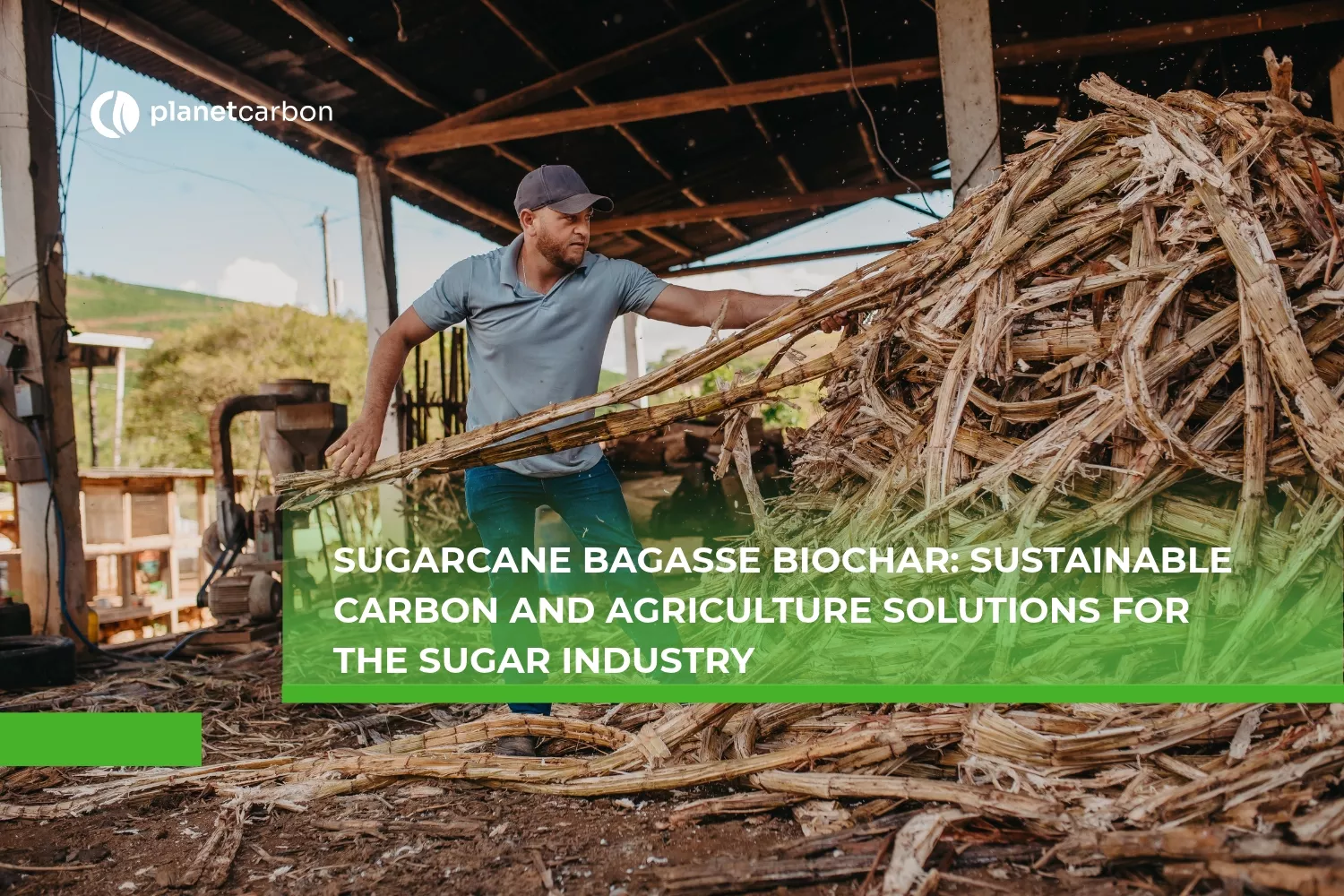
Every sugarcane milling season, plantation and agribusiness companies generate massive volumes of bagasse, the fibrous residue left after juice extraction. Most of it is either burned in open fields or left to decompose, both of which release stored carbon back into the atmosphere and contribute directly to a company’s Scope 1 emissions footprint.
As ESG disclosure requirements tighten and corporate buyers increasingly scrutinize supply chain emissions, unmanaged agricultural waste is no longer just an operational nuisance. It has become a reputational and compliance liability, especially for companies operating under Indonesia’s National Carbon Economy framework or those selling into markets that demand credible sustainability credentials.
Bagasse biochar offers a fundamentally different path. By converting this abundant residue through a controlled thermal process, agribusiness companies can simultaneously eliminate a waste problem, generate a durable carbon removal asset, and unlock revenue from the voluntary carbon market, all from feedstock that was previously valueless or, worse, a source of emissions.
What is Sugarcane Bagasse Biochar?
Sugarcane bagasse biochar is a carbon-rich solid material produced when bagasse, the fibrous byproduct of juice extraction, is heated at high temperatures in a low-oxygen or oxygen-free environment through a process called pyrolysis. Unlike simple combustion, pyrolysis does not burn the biomass completely. Instead, it converts the organic material into a stable, porous structure where carbon is locked in a recalcitrant form that resists biological decomposition for hundreds to thousands of years.
What distinguishes biochar from other agricultural residue applications is this combination of permanence and versatility. The same material that qualifies as a high-permanence carbon removal instrument under recognized international carbon certification standards can also be applied directly to agricultural soil as a long-term amendment. For the sugar industry, this dual function means bagasse transitions from a cost center into a strategic asset with measurable environmental and financial value.
Feedstock Potential: How Large Is Indonesia’s Sugarcane Bagasse Resource?
Indonesia is among Southeast Asia’s significant sugarcane producers, with cultivation concentrated in Java, Sumatra, and parts of Sulawesi. The country’s sugar mills collectively process millions of tonnes of sugarcane annually, generating bagasse at approximately 25 to 30 percent of total cane weight by mass, according to data published in peer-reviewed biomass conversion literature. At national production volumes, this translates to several million tonnes of bagasse produced each season, much of which is either co-fired in boilers with limited efficiency or left as open stockpiles.
From a biochar feedstock perspective, even a fraction of this volume represents a substantial production opportunity. A tonne of dry bagasse can yield roughly 25 to 35 percent of its weight as biochar depending on pyrolysis conditions, meaning a mid-sized sugar mill processing 500,000 tonnes of cane per season could theoretically produce tens of thousands of tonnes of biochar annually. The scale of this resource is one of the most compelling arguments for agribusiness companies to treat sugarcane waste biochar not as a niche experiment but as a core component of their carbon strategy.
The Production Process of Biochar from Sugarcane Bagasse
Producing biochar that meets the quality thresholds required for both agronomic application and carbon credit certification involves more than simply applying heat to biomass. Each stage of the production chain, from initial feedstock handling through to final quality testing, directly influences the carbon stability, agronomic performance, and market eligibility of the resulting product.
1. Feedstock Preparation and Drying
Fresh bagasse as it exits the milling process typically carries a moisture content of 45 to 55 percent. Because pyrolysis efficiency drops significantly when feedstock moisture exceeds 20 to 25 percent, controlled drying is a necessary first step. In practice, this can be achieved through natural solar drying in covered areas, rotary drum dryers, or by using waste heat recovered from the pyrolysis unit itself, which improves overall system energy efficiency.
Particle size and uniformity also matter. Bagasse that is shredded or milled to a consistent size range feeds more evenly through continuous pyrolysis reactors, reducing hot spots and ensuring homogenous thermal conversion. Proper feedstock preparation at this stage directly reduces variability in the final biochar quality, which is important when subsequent certification requires batch-level documentation.
2. The Pyrolysis Process and Parameter Control
The core of the biochar pyrolysis process involves heating the prepared bagasse to temperatures typically between 400 and 700 degrees Celsius in a reactor where oxygen is excluded or severely restricted. The specific temperature range and residence time are the primary levers controlling biochar properties. Higher pyrolysis temperatures generally produce biochar with greater carbon stability, higher surface area, and a more alkaline pH, all of which are desirable for both soil application and carbon permanence scoring under certification frameworks.
Pyrolysis reactors used at commercial scale include fixed-bed batch kilns, rotary drum systems, and continuous screw or auger reactors. Each design has different throughput capacity, energy recovery potential, and capital cost profiles. The co-products of pyrolysis, syngas and bio-oil, can be captured and used to supply heat back into the drying or pyrolysis stages, making well-designed systems partially or fully energy self-sufficient.
3. Biochar Characterization and Quality Control
Once produced, each biochar batch must be characterized through laboratory analysis to confirm its suitability for intended applications. The key parameters measured include fixed carbon content, hydrogen-to-organic-carbon ratio (H/Corg), surface area, pH, electrical conductivity, and the concentration of polycyclic aromatic hydrocarbons (PAHs) and heavy metals to ensure the material is safe for agricultural use.
The H/Corg ratio is particularly significant in the context of carbon credit applications because it serves as a proxy for carbon stability. A lower ratio indicates greater structural stability and therefore a higher probability that the sequestered carbon will persist in the soil over long timescales. Recognized international carbon certification standards set minimum thresholds for this ratio as part of their permanence scoring methodology.
Read Also : How to Make Coconut Shell Biochar for Agricultural Companies and Farmer Cooperatives
Agronomic Benefits of Sugarcane Bagasse Biochar for Plantation Land
Beyond its carbon sequestration function, bagasse biochar delivers measurable agronomic value when incorporated into the soil profiles of plantation land, including the very sugarcane fields from which the feedstock originated. The benefits span soil physics, chemistry, and biology, and they compound over successive growing seasons in ways that improve land productivity at a scale relevant to large estate operations.
1. Improving Soil Structure and Fertility
Bagasse biochar’s highly porous microstructure increases soil aeration and reduces bulk density when applied to compacted or heavy clay soils common in Indonesian plantation regions. This improved structure enhances root penetration depth and creates more favorable conditions for microbial communities that drive nutrient cycling. Studies on tropical agricultural soils have shown that biochar application rates in the range of 5 to 20 tonnes per hectare can meaningfully reduce soil bulk density and increase aggregate stability over a two to three season period.
On acidic soils, which are prevalent across much of Sumatra and Kalimantan, the alkaline nature of high-temperature biochar acts as a slow-release liming agent, gradually raising pH toward ranges more favorable for nutrient availability. Unlike agricultural lime, which dissolves and leaches relatively quickly, biochar’s liming effect persists alongside its carbon matrix in the soil for decades.
2. Fertilizer and Water Use Efficiency
The high cation exchange capacity (CEC) of well-produced biochar allows the material to adsorb and slowly release plant-available nutrients, particularly potassium, ammonium, and phosphate. This buffering effect reduces nutrient leaching losses, which are a major source of both economic waste and nitrogen-based greenhouse gas emissions in intensively managed plantation soils.
Water retention is a parallel benefit. Biochar’s porous structure increases the soil’s capacity to hold plant-available water, reducing irrigation demand or improving drought resilience on rain-fed land. In pilot applications on sugarcane plots in tropical regions, biochar-amended soils have shown water retention improvements of 15 to 25 percent compared to unamended control plots, according to findings published in peer-reviewed soil science journals. For large estates managing water costs and yield consistency, this represents a direct operational benefit alongside the carbon and environmental value.
3. Long-Term Impact on Land Productivity
Unlike most soil amendments whose effects diminish within a single season, biochar’s carbon matrix remains physically present in the soil for centuries. This means the agronomic improvements it delivers compound over time rather than requiring repeated large-volume applications. Over a ten-year horizon, plantations that systematically apply biochar from their own waste streams are building a soil capital asset that reduces input costs, improves yield stability, and enhances the long-term productive capacity of their land.
From an agribusiness planning perspective, this has implications for land valuation, ESG reporting, and supply chain sustainability commitments. Soil carbon improvement documented through standardized measurement protocols can also contribute to corporate sustainability disclosures under frameworks such as the GHG Protocol, providing a secondary benefit beyond the direct carbon credit revenue stream.
Sugarcane Bagasse Biochar as a Carbon Instrument: From Production to Carbon Credits
The carbon credit dimension of biochar is what elevates it from an agronomic practice to a structured financial instrument within the voluntary carbon market. Understanding how the carbon sequestration mechanism works, how it is measured and verified, and what it is worth commercially is essential for agribusiness companies assessing whether to pursue a formal biochar carbon credit project.
1. The Mechanism of Carbon Sequestration in Biochar
When sugarcane grows, it absorbs atmospheric carbon dioxide through photosynthesis and stores that carbon in its biomass, including in the bagasse. Under normal disposal pathways, that carbon is rapidly re-released as CO2 through combustion or microbial decomposition, completing a short carbon cycle with no net removal benefit. Pyrolysis interrupts this cycle by converting the biomass carbon into a thermally stable aromatic structure that resists biological breakdown.
The result is that carbon which would have returned to the atmosphere within months or years is instead locked into the biochar matrix for a timescale measured in centuries to millennia. This is the principle of permanent carbon sequestration biochar proponents reference when describing the instrument’s climate value. The permanence is not hypothetical; it is measurable through the H/Corg ratio and cross-validated against soil incubation studies that model long-term carbon stability under field conditions.
2. The MRV Process and Carbon Credit Certification
Generating tradeable carbon credits from a biochar project requires a rigorous biochar MRV process, where MRV stands for Measurement, Reporting, and Verification. This process begins at the point of feedstock sourcing, where the origin and quantity of bagasse must be documented to establish the baseline emissions that would have occurred without the project. From there, each production batch is characterized, and the quantity of carbon sequestered per tonne of biochar is calculated according to the methodology specified by the chosen recognized international carbon certification standard.
Once a batch is produced and characterized, project documentation is submitted to an accredited independent verification body, which audits the production records, laboratory data, and methodology compliance before issuing credits. The credits are then registered on a publicly auditable carbon registry and can be retired by a corporate buyer as evidence of carbon removal, or sold into the secondary market. For companies seeking to generate credits from agricultural biomass carbon removal, this chain of custody documentation is non-negotiable, and building it into operations from the start is significantly more cost-effective than retrofitting it later.
3. The Economic Value of Biochar Carbon Credits
Biochar carbon credits occupy a premium segment within the voluntary carbon market because they combine high permanence scores with co-benefits, including soil improvement, waste valorization, and support for agricultural communities. As a result, they have historically commanded prices well above the market average for lower-permanence nature-based offsets. Market pricing for high-quality, certified biochar removal credits has ranged from approximately USD 100 to USD 300 per tonne of CO2 equivalent in recent years, with demand particularly strong from European corporate buyers seeking credits that align with the Integrity Council for the Voluntary Carbon Market’s Core Carbon Principles.
For an agribusiness company producing, say, 10,000 tonnes of biochar per year with a sequestration factor of roughly 2.5 to 3 tonnes of CO2 equivalent per tonne of biochar, the carbon credit revenue potential ranges from USD 2.5 million to USD 9 million annually at those price points, before accounting for any avoided cost from waste disposal or agronomic input savings. This commercial case is what makes the carbon credit from agricultural waste pathway increasingly attractive to forward-looking plantation operators.
Indonesia’s Carbon Market Regulations and Opportunities for Biochar Projects
Indonesia’s regulatory framework for carbon markets has been substantially updated through Presidential Regulation No. 110 of 2025 (Perpres 110/2025), which replaces the earlier Perpres 98/2021 and establishes a more comprehensive legal architecture for the National Carbon Economy (NEK). Perpres 110/2025 defines the mechanisms for carbon trading, carbon levy, and carbon offsetting in Indonesia, and sets out the governance structure under which domestic and internationally linked carbon transactions are administered.
For biochar projects in Indonesia, this regulatory environment creates both obligations and opportunities. Projects that generate carbon units domestically must comply with NEK registration requirements, including project documentation, validation by accredited bodies, and registration in the national carbon registry system. At the same time, compliant projects gain access to Indonesia’s official carbon exchange, which operates under the supervision of the national financial authority, as well as the ability to participate in internationally recognized voluntary carbon market instruments where international linkage provisions apply.
The practical implication for sugar industry players is that acting now, while the regulatory framework is still being operationalized, provides a first-mover advantage in securing project registrations and establishing MRV systems before compliance requirements become more stringent. Companies that build verified carbon removal into their operations today are also better positioned to respond to future mandatory disclosure regimes, whether under Indonesian law or under the import-linked sustainability requirements of key export markets.
Start Your Sugarcane Bagasse Biochar Project with Planet Carbon
If you are managing a sugarcane operation and have been treating bagasse as a disposal problem, the opportunity to convert it into a verified carbon removal asset is more accessible than it may appear. Planet Carbon’s Integrated Carbon Solutions Platform covers the full project lifecycle, from feasibility assessment and feedstock analysis through to biochar production design, MRV system development, and carbon credit commercialization. Whether your priority is reducing your emissions footprint, generating new revenue from waste biomass, or both, the starting point is understanding what your specific feedstock volumes and land conditions make possible.
The team at Planet Carbon works with agribusiness companies, plantation operators, and biomass suppliers across the development, validation, and commercialization stages of bagasse biochar projects. If you are exploring what a biomass supply partnership or a full project development engagement could look like for your organization, we would be glad to have that conversation. Reach out to the Planet Carbon team to discuss your situation and find out where the process would begin for your operation.
Referensi:
- Food and Agriculture Organization of the United Nations (FAO): Global sugarcane production statistics and bagasse yield ratios – https://www.fao.org/faostat
- ScienceDirect / Bioresource Technology: Peer-reviewed data on bagasse biochar pyrolysis yields, carbon stability ratios, and soil amendment effects – https://www.sciencedirect.com/science/article/abs/pii/S0961953424001594
- GHG Protocol: Corporate accounting and reporting standards for Scope 1 emissions and land-use carbon – https://ghgprotocol.org
- Integrity Council for the Voluntary Carbon Market (ICVCM): Core Carbon Principles (CCP) framework and permanence scoring methodology – https://icvcm.org
- Peraturan Presiden Republik Indonesia Nomor 110 Tahun 2025 tentang Nilai Ekonomi Karbon: Legal basis for Indonesia’s National Carbon Economy framework – https://peraturan.go.id/id/perpres-no-110-tahun-2025
Read Also : How to Make Corn Cob Biochar as a High-Carbon-Value Biomass Waste Solution