

Global average temperatures have already risen approximately 1.1°C above pre-industrial levels, and the pace of warming continues to accelerate, driven largely by rising concentrations of greenhouse gases in the atmosphere. For policymakers and researchers, this is no longer a distant projection; it is a measurable, present-day crisis with direct consequences for national economies, agricultural systems, and public health.
Yet despite decades of international negotiation and national commitments, global greenhouse gas emissions reached a record high of 57.4 billion tonnes of CO₂ equivalent in 2023, according to the UNEP Emissions Gap Report. The gap between pledged action and actual reduction remains dangerously wide, and the institutions best positioned to close it, whether governments, research bodies, or industry, often lack a shared, technically grounded understanding of what these gases are and how they behave.
This guide answers the foundational question of what are greenhouse gases and builds outward to address their sources, their mechanisms of climate forcing, and the intervention points where science-backed solutions such as biochar-based carbon removal can make a measurable difference.
What are Greenhouse Gases?
Greenhouse gases are a group of atmospheric compounds that absorb and re-emit infrared radiation, trapping heat within the Earth’s lower atmosphere rather than allowing it to escape into space. This process, known as the greenhouse effect, is not inherently harmful; in fact, without it, the Earth’s average surface temperature would be approximately minus 18°C, making the planet largely uninhabitable.
The problem arises when human activities release these gases in quantities far beyond what natural systems can absorb or balance. The resulting intensification of the greenhouse effect raises global mean temperatures, disrupts precipitation patterns, and shifts the stability of ecosystems that billions of people depend on.
From a regulatory and corporate reporting standpoint, greenhouse gases are formally categorized under the GHG Protocol and national inventory frameworks. These frameworks define which gases must be measured, monitored, and disclosed, making technical literacy in this area a prerequisite for credible climate action.
Types of Greenhouse Gases and Their Warming Potential
Understanding the distinct physical and chemical properties of each greenhouse gas is essential for designing effective mitigation strategies. Each gas differs in its atmospheric lifetime, warming intensity, and primary emission sources, and those differences have direct implications for how reduction targets are set and measured.
1. Carbon Dioxide (CO₂)
Carbon dioxide is the most widely discussed greenhouse gas and serves as the baseline reference for measuring warming potential, expressed as a Global Warming Potential (GWP) of 1 over a 100-year horizon. It enters the atmosphere primarily through the combustion of fossil fuels, cement production, and deforestation, and can persist in the atmosphere for hundreds to thousands of years depending on the carbon cycle sink it eventually enters.
Because of its longevity and volume, CO₂ represents the dominant driver of long-term anthropogenic warming. As of 2023, atmospheric CO₂ concentrations reached approximately 421 parts per million, the highest level recorded in at least 800,000 years of ice core data, according to NOAA’s Global Monitoring Laboratory.
2. Methane (CH₄)
Methane is a significantly more potent greenhouse gas than CO₂ in the short term, with a GWP of approximately 84 over 20 years and 28 over 100 years, according to the IPCC Sixth Assessment Report. It is released from sources including livestock digestion, rice cultivation, landfill decomposition, and natural gas infrastructure leaks.
Despite its shorter atmospheric lifetime of roughly 12 years compared to centuries for CO₂, methane’s near-term warming intensity makes it a priority target for rapid climate intervention. Reducing methane emissions is increasingly recognized as one of the fastest pathways to slowing the rate of near-term temperature rise.
3. Nitrous Oxide (N₂O)
Nitrous oxide has a GWP of approximately 273 over a 100-year period, making it the third most significant contributor to anthropogenic warming. It is released primarily from the application of nitrogen-based fertilizers, livestock manure management, and certain industrial processes.
N₂O is also notable for its role in stratospheric ozone depletion, adding a secondary environmental risk beyond its warming effect. Agricultural systems are responsible for approximately 70% of global nitrous oxide emissions, making land-use reform and soil management critical levers for reducing this gas.
4. Fluorinated Gases (HFCs, PFCs, SF₆)
Fluorinated gases, including hydrofluorocarbons, perfluorocarbons, and sulfur hexafluoride, are entirely synthetic compounds with no natural atmospheric sources. Their GWP values range from hundreds to tens of thousands relative to CO₂, and some persist in the atmosphere for thousands of years.
Although their total volume is small compared to CO₂ or methane, their extreme warming intensity and persistence make them disproportionately impactful per molecule released. They are used primarily in refrigeration, air conditioning, electrical insulation, and semiconductor manufacturing, sectors where substitution requires significant capital investment and regulatory pressure.
Causes of Greenhouse Gas Emissions
Greenhouse gas emissions do not originate from a single sector; they are the cumulative output of energy, industrial, agricultural, and waste systems that have been optimized for economic throughput rather than atmospheric stability. A clear sectoral breakdown is necessary for any organization or government body seeking to identify where interventions will deliver the most measurable impact.
1. Energy and Transportation Sectors
The energy sector, encompassing electricity generation and heat production, remains the single largest source of global greenhouse gas emissions, accounting for approximately 34% of total global GHG output according to the IEA World Energy Outlook. Combustion of coal, natural gas, and oil releases CO₂ and in some cases methane through fugitive emissions from extraction and distribution infrastructure.
Transportation adds a further significant share, contributing roughly 15% of global emissions through the combustion of petroleum products in road vehicles, aviation, and maritime shipping. Electrification of transport combined with a shift to low-carbon power generation represents one of the highest-leverage decarbonization pathways currently available.
2. Industry and Manufacturing Sectors
Industrial processes such as steel production, cement manufacturing, and chemical synthesis release CO₂ and other greenhouse gases both through energy combustion and through chemical reactions inherent to the production process itself. Cement production alone accounts for approximately 8% of global CO₂ emissions, as the calcination of limestone releases CO₂ that cannot be avoided simply by switching to cleaner energy.
These process emissions present a particular challenge for decarbonization because they require technological transformation rather than fuel switching. Sectors with high process emission intensity are therefore among the most likely candidates for carbon credit instruments and carbon removal solutions to address residual emissions that cannot be eliminated through operational changes alone.
3. Agriculture and Land Use Change Sectors
Agriculture contributes to greenhouse gas emissions through multiple pathways: methane from enteric fermentation in livestock, nitrous oxide from fertilized soils, and CO₂ from land clearing and peatland drainage. When combined with land use change and forestry, this sector accounts for roughly 22% of global greenhouse gas emissions according to the IPCC.
Indonesia’s agricultural sector, in particular, is characterized by high peatland and biomass carbon stocks alongside significant agricultural residue volumes. This creates both a risk of continued emissions from land conversion and an opportunity for carbon removal through biomass valorization approaches such as biochar.
4. Waste Management Sector
Landfill decomposition of organic waste produces methane as organic matter breaks down in anaerobic conditions, making the waste sector a meaningful source of short-lived but potent greenhouse gas emissions. Wastewater treatment and open burning of agricultural and municipal waste add further CO₂ and N₂O to the atmospheric load.
Beyond landfill methane, the sector presents an underutilized opportunity: organic waste streams that currently decompose and emit greenhouse gases could instead be converted into value-added products. Biochar production from agricultural residues is one such pathway, simultaneously diverting waste from landfill and sequestering carbon in a stable solid form.
Read Also : What is Carbon Emission? Causes, Impacts, and How to Address Them
Impacts of Greenhouse Gases on Climate, the Economy, and Business
Elevated greenhouse gas emissions translate into compounding physical risks, including sea level rise, intensified extreme weather events, and agricultural yield disruption, all of which carry direct economic consequences for businesses operating in exposed regions. Beyond physical risk, however, regulatory and market frameworks are rapidly shifting the financial landscape for organizations that do not take substantive action. The following sub-sections outline three dimensions of this regulatory and market pressure that are particularly relevant for Indonesian and regionally active organizations.
1. Presidential Regulation 110/2025 and Strengthening the National Carbon Economic Value (NEK) System
Indonesia’s National Carbon Economic Value system, known as NEK, provides the regulatory foundation for domestic carbon markets and mandatory GHG reporting obligations. Presidential Regulation No. 110 of 2025 (Perpres 110/2025), which replaced the earlier Perpres 98/2021, strengthens this framework by expanding coverage, clarifying the role of carbon credits within national climate accounting, and aligning domestic market mechanisms with international carbon market standards under Article 6 of the Paris Agreement.
For industrial players and project developers operating within Indonesia, Perpres 110/2025 establishes which sectors face mandatory emission caps, how Emission Reduction Certificates (SPE-GRK) are issued and traded, and what conditions apply to the export of carbon credits through international cooperation mechanisms. Compliance with this regulation is not optional for covered entities, and the administrative and financial penalties for non-compliance are becoming progressively more significant as enforcement matures.
2. NDC and National Emission Reduction Targets
Indonesia’s updated Nationally Determined Contribution commits to reducing greenhouse gas emissions by 31.89% unconditionally and up to 43.20% with international support by 2030, relative to a business-as-usual scenario. These targets cascade into sectoral obligations that affect energy producers, forestry operators, waste managers, and agricultural businesses in ways that are increasingly difficult to defer.
For organizations embedded in regulated supply chains or seeking to maintain operating licenses in carbon-intensive sectors, alignment with NDC pathways is shifting from a voluntary best practice to a practical operational requirement. Understanding the NDC architecture and how it intersects with corporate GHG reporting is therefore a baseline competency for sustainability and compliance teams.
3. Science Based Targets and Pressure from Global Supply Chains
The Science Based Targets initiative (SBTi) provides a globally recognized methodology for aligning corporate emission reduction targets with the 1.5°C pathway established under the Paris Agreement. Multinational buyers, institutional investors, and procurement teams are increasingly requiring suppliers, particularly those in high-emission sectors or geographies, to demonstrate SBTi-aligned targets as a condition of continued commercial relationships.
This creates a supply chain transmission effect: even companies that are not directly regulated may face market exclusion if their emissions profile is inconsistent with the net zero commitments of their customers. Organizations that proactively understand their GHG footprint, invest in reduction measures, and supplement residual emissions with high-quality carbon removal credits are better positioned to maintain access to premium markets and international partnerships.
How to Reduce Your Carbon Footprint
Reducing an organization’s carbon footprint is rarely a single-step process; it requires a structured approach that prioritizes direct operational changes before turning to market-based instruments. The sub-sections below outline a practical framework that begins with the reduction hierarchy and extends to the role of biochar and carbon credits as complementary tools in a credible net zero strategy.
1. The Reduction Hierarchy: Reduce First, Offset Later
The Oxford Principles for Net Zero Aligned Offsetting and the GHG Protocol both emphasize the same foundational logic: emission reductions within an organization’s own value chain must take precedence over the use of offsets or carbon credits. This principle is not merely an ethical guideline; it is increasingly embedded in the criteria applied by recognized international carbon certification standards and scrutinized by corporate buyers of carbon credits.
In practice, the reduction hierarchy means conducting a thorough Scope 1, 2, and 3 emissions inventory, identifying high-priority abatement opportunities, setting interim reduction targets, and only then calculating the residual emissions that may warrant offsetting. Organizations that invert this sequence, reaching for carbon credits before addressing operational sources, face growing reputational and financial risk as market integrity standards tighten.
2. The Role of Biochar as a Nature-Based Carbon Removal Solution
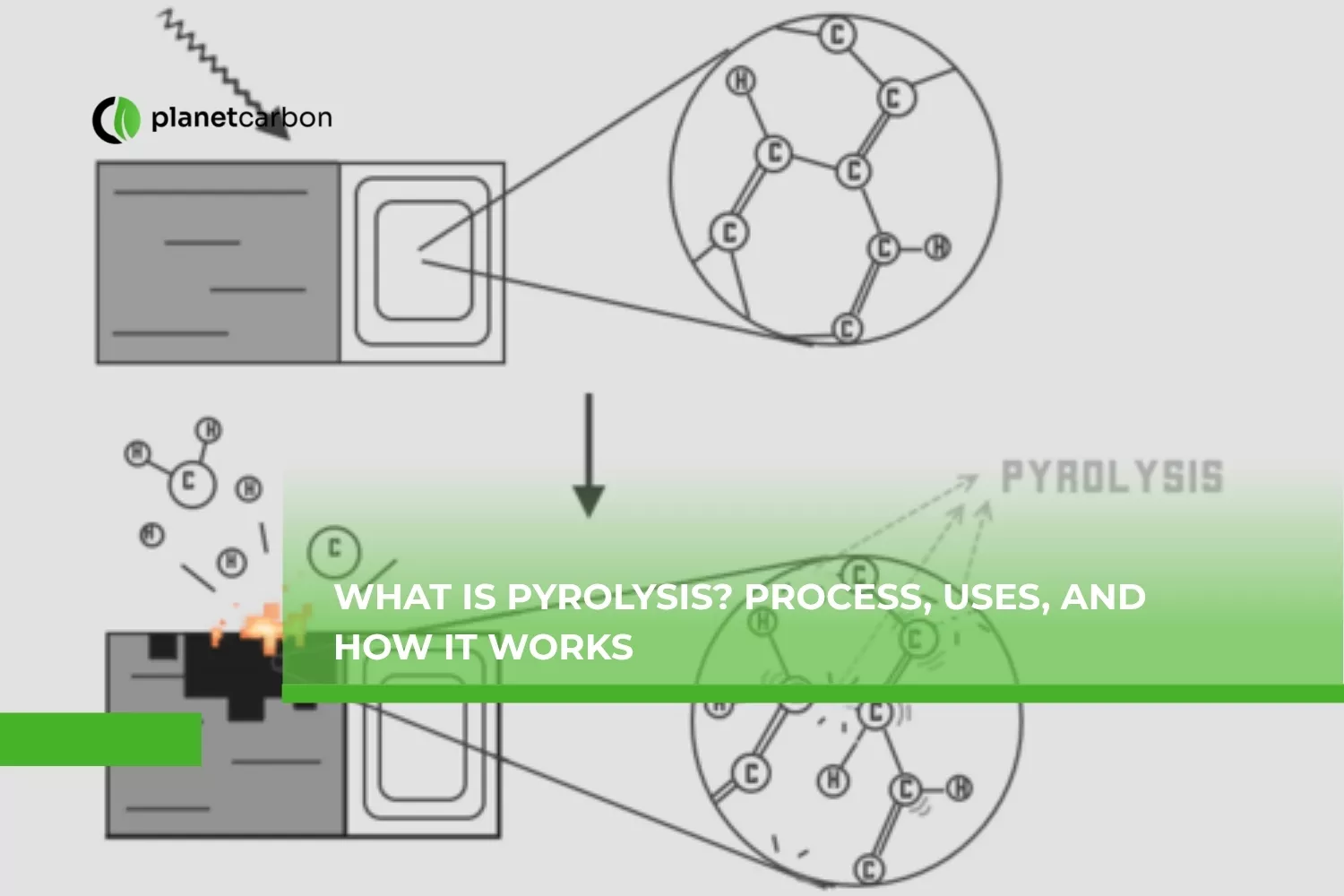
Biochar is produced through the thermochemical conversion of organic biomass under low-oxygen conditions, a process known as pyrolysis. The result is a stable, carbon-rich solid material in which a significant proportion of the carbon originally fixed by plants through photosynthesis is locked into a recalcitrant structure that resists biological decomposition for decades to centuries.
Unlike many other nature-based carbon removal approaches, biochar carbon removal generates co-benefits that extend beyond climate. When applied to agricultural soils, biochar can improve water retention, reduce nitrous oxide emissions from soil, and increase the efficiency of nutrient uptake, thereby contributing to both climate and food system resilience simultaneously. This multi-benefit profile makes it particularly relevant for Indonesia’s agricultural landscape, where large volumes of rice husk, palm kernel shell, and other biomass residues are currently underutilized or openly burned.
3. Carbon Credits as a Climate Finance Instrument
Carbon credits generated from high-quality removal projects, including biochar-based projects verified under recognized international carbon certification standards, represent both a climate finance mechanism and a tool for corporate climate strategy. For project developers, credits provide a revenue stream that improves the financial viability of carbon removal activities that would otherwise be cost-prohibitive. For corporate buyers, verified carbon removal credits allow them to address residual emissions that remain after exhausting operational reduction options.
Within Indonesia’s regulated framework under Perpres 110/2025, domestic carbon credits issued as Emission Reduction Certificates can be traded through an official carbon exchange regulated by the national financial authority, with international credits subject to the authorization conditions established under the NEK system. For organizations navigating both the voluntary and compliance dimensions of carbon markets, the integrity of the underlying project, verified by an accredited independent verification body, is the primary determinant of whether a credit will retain its value under tightening market standards.
Consult Your Biochar Project with Planet Carbon
If your organization is working through the complexity of greenhouse gas emissions management, whether that means understanding your GHG baseline, designing a biochar carbon removal project, or navigating the certification and commercialization pathway for carbon credits, Planet Carbon’s integrated approach covers all three stages of the journey: Develop, Validate, and Commercialize.
The team at Planet Carbon brings together technical expertise in biochar systems, carbon accounting under GHG Protocol frameworks, and familiarity with Indonesia’s evolving regulatory landscape under Perpres 110/2025. Rather than working with fragmented service providers across different parts of the carbon project lifecycle, clients engage a single platform with end-to-end capability.
If you are exploring whether a biochar-based carbon removal project is viable for your organization or your region, reaching out to the Planet Carbon team for an initial discussion is a practical first step. There is no pressure and no obligation; it is simply a conversation about where the opportunities and constraints lie for your specific context.
Referensi:
- UNEP: Emissions Gap Report 2023, global GHG emissions reaching 57.4 billion tonnes CO₂e in 2023 – https://www.unep.org/resources/emissions-gap-report-2023
- NOAA Global Monitoring Laboratory: Atmospheric CO₂ concentration data, 421 ppm recorded in 2023 – https://gml.noaa.gov/ccgg/trends/
- IPCC: Sixth Assessment Report (AR6), GWP values for methane and nitrous oxide – https://www.ipcc.ch/assessment-report/ar6/
- IEA: World Energy Outlook, energy sector share of global GHG emissions – https://www.iea.org/reports/world-energy-outlook-2023
- Government of Indonesia: Presidential Regulation No. 110 of 2025 on the National Carbon Economic Value (NEK) – https://peraturan.go.id/id/perpres-no-110-tahun-2025
- Science Based Targets initiative (SBTi): Corporate net zero standard and 1.5°C pathway alignment methodology – https://sciencebasedtargets.org/
- Oxford Principles for Net Zero Aligned Offsetting: Framework for responsible use of carbon offsets – https://www.smithschool.ox.ac.uk/research/oxford-offsetting-principles
- GHG Protocol: Corporate accounting and reporting standard for Scope 1, 2, and 3 emissions – https://ghgprotocol.org/
Read Also : What is a Carbon Footprint? Causes, Impacts, and How to Reduce It