

Every year, global CO2 emissions from energy and industry alone surpass 37 billion tonnes, according to the Global Carbon Project (2023). For researchers, policymakers, and corporate sustainability leads, this number is no longer just a scientific data point. It carries regulatory, financial, and reputational weight that grows heavier with each passing reporting cycle.
Yet despite the scale of the problem, there remains persistent confusion about what is carbon emissions, which sectors produce the most, and why conventional reduction pledges consistently fall short of agreed climate targets. Without a clear conceptual foundation, even well-intentioned climate policies risk being built on incomplete data.
This guide breaks down the definition, sources, and systemic consequences of carbon emissions, and examines how emerging solutions including biochar-based carbon removal are beginning to offer measurable, verifiable pathways toward carbon negativity for corporations, governments, and agricultural partners alike.
What is Carbon Emission?
Carbon emissions refer to the release of carbon-containing gases into the atmosphere, primarily carbon dioxide (CO2) and methane (CH4), as a result of human activity and natural processes. These gases trap heat in the atmosphere through what scientists call the greenhouse effect, so the steady accumulation of such gases over decades is now the primary driver of observed global warming.
In a business and policy context, the carbon emissions definition extends beyond CO2 alone. The GHG Protocol, the globally accepted framework for measuring and managing greenhouse gas emissions, categorizes corporate emissions into three scopes: Scope 1 covers direct emissions from owned operations, Scope 2 covers emissions from purchased energy, and Scope 3 covers all other indirect emissions across the value chain.
Understanding this distinction matters because it directly shapes how organizations set science-based targets, report ESG data, and participate in carbon markets. A company that only measures Scope 1 while overlooking Scope 3 will consistently understate its true climate exposure.
Main Sources of Carbon Emissions at the Global and National Levels
Carbon emissions do not come from a single sector or activity. They are generated across interconnected systems in energy, land use, and industry, so addressing them requires understanding each source in context.
1. Energy and Transportation Sectors
The energy sector remains the largest single source of global greenhouse gas emissions, accounting for approximately 73% of total global emissions when including transport, buildings, and industry powered by fossil fuels, according to Our World in Data citing Climate Watch data (2020). Burning coal, oil, and natural gas for electricity generation and transportation releases vast quantities of CO2 that have no natural absorption pathway at the current rate of output.
Transportation alone contributes around 16% of global emissions, with road vehicles being the dominant source. As economies in Southeast Asia continue to grow and motorization rates rise, this figure is expected to remain a significant pressure point for both national NDC targets and corporate Scope 3 inventories.
2. Agriculture, Forestry, and Other Land Use (AFOLU)
The AFOLU sector accounts for approximately 18.4% of global greenhouse gas emissions, according to the Intergovernmental Panel on Climate Change (IPCC) Sixth Assessment Report (AR6, 2022). Deforestation, peatland degradation, livestock methane emissions, and the decomposition of organic agricultural waste all contribute to this figure.
For Indonesia specifically, land-use change and forestry have historically been among the largest sources of national emissions, given the extent of tropical forest cover and peatland ecosystems. Agricultural waste such as rice husks, sugarcane bagasse, and palm kernel shells is particularly relevant here, as it represents both a significant emissions source when left to decompose or burned, and a feedstock opportunity for biochar-based carbon removal.
3. Industry and Manufacturing Processes
Industrial processes including cement production, steel manufacturing, and chemical synthesis release CO2 not only through energy use but through chemical reactions that are inherently emissions-intensive. Cement production alone contributes roughly 3% of global CO2 emissions purely from the calcination process, separate from any fuel combustion involved.
For heavy-industry players navigating ESG emissions compliance, this distinction between process emissions and energy emissions is critical. It limits the extent to which renewable energy transitions alone can decarbonize operations, so residual emissions require carbon removal strategies rather than simple abatement measures.
Impacts of Carbon Emissions on Earth’s Systems and Human Life
The consequences of accumulated carbon emissions are no longer projected risks contained in climate models. They are present realities unfolding across ecosystems, economies, and communities in ways that compound over time and interact with one another. The following categories capture the most material impacts across physical, biological, and human systems.
1. Rising Global Temperatures and Climate Change
Global average surface temperatures have already risen by approximately 1.1 to 1.2 degrees Celsius above pre-industrial levels, according to the IPCC AR6 (2021). Even this relatively modest increase has measurably altered precipitation patterns, accelerated glacier retreat, and increased the frequency of heat extremes across multiple continents.
The scientific consensus holds that limiting warming to 1.5 degrees Celsius requires reaching net zero CO2 emissions globally by around 2050, a timeline that demands structural transformation rather than incremental efficiency gains. Without that transformation, temperature trajectories point toward 2.5 to 4 degrees of warming by 2100 under current policy scenarios.
2. Impact on Food and Water Security
Shifts in temperature and rainfall patterns are already reducing crop yields for staple foods in many regions. Research published in Nature Climate Change (2021) projects that global maize yields could decline by up to 24% by 2030 under a high-emissions scenario, while wheat and rice face comparable pressures depending on latitude and irrigation access.
Water security is equally affected because glacial retreat reduces freshwater availability for hundreds of millions of people who depend on glacial melt for seasonal water supply. In regions already experiencing water stress, this compounds existing vulnerabilities in ways that translate directly into agricultural instability and economic dislocation.
3. Occurrence of Natural Disasters
Warmer atmospheric and ocean temperatures increase the intensity and frequency of extreme weather events including tropical cyclones, flooding, and prolonged drought. The IPCC AR6 attributes the increased intensity of heavy precipitation events globally to observed warming, with a direct statistical link to rising greenhouse gas concentrations.
For coastal and agricultural economies, this is not an abstract future risk. Infrastructure losses, crop failures, and displacement costs from climate-driven disasters already run into hundreds of billions of dollars annually, according to Munich Re’s NatCatSERVICE database. These costs are increasingly appearing in corporate risk disclosures and insurance pricing.
4. Loss of Biodiversity
Ecosystems that evolved under stable climate conditions are under pressure as temperatures and rainfall patterns shift faster than many species can adapt. The IPCC has identified climate change as a major driver of biodiversity loss, particularly in tropical forests, coral reef systems, and polar regions.
Biodiversity loss in turn reduces ecosystem resilience, so the very natural systems that buffer against climate extremes, including forests that absorb CO2 and wetlands that moderate flooding, become less capable of performing those functions. This creates a feedback loop that accelerates both ecological and emissions-related risk.
5. Environmental Damage
Ocean acidification is a direct chemical consequence of elevated atmospheric CO2, as the ocean absorbs roughly 25 to 30% of global CO2 emissions annually, according to the Global Carbon Project. The resulting drop in ocean pH threatens shell-forming marine organisms and the broader food webs that depend on them.
Soil degradation is another underrecognized environmental impact. Agricultural practices that deplete soil organic matter reduce both land productivity and the soil’s natural capacity to sequester carbon, creating a compounding cycle that weakens both food systems and the land-based carbon sink.
6. Human Health
Air pollution from fossil fuel combustion is responsible for approximately 8.7 million premature deaths per year globally, according to a study published in Environmental Research (2021). The health burden falls disproportionately on urban populations in rapidly industrializing economies, where energy poverty and air quality governance often intersect.
Beyond air quality, climate-driven changes in temperature and humidity expand the geographic range of vector-borne diseases such as dengue and malaria. Heat stress, particularly for outdoor and agricultural workers, is an increasingly recognized occupational health issue with direct economic consequences for labor productivity in tropical regions.
Indonesia’s Policy Framework for Carbon Emission Reduction
Indonesia has established one of the most comprehensive national policy architectures in Southeast Asia for what is carbon emissions reduction, combining internationally aligned commitments with a domestic regulatory structure designed to mobilize both public and private climate finance. The three pillars below illustrate how this framework is structured and why it matters for corporate and project-level decision-making.
1. NDC Commitments and the 2060 Net Zero Target
Indonesia submitted its Enhanced Nationally Determined Contribution (NDC) to the UNFCCC in 2022, committing to a 31.89% unconditional emissions reduction by 2030, rising to 43.20% with international support, relative to a business-as-usual baseline. These targets span multiple sectors including energy, forestry, waste, industry, and agriculture.
Indonesia has also committed to achieving national net zero emissions by 2060 or earlier, a long-term target that requires structural decarbonization across the economy rather than efficiency measures alone. For corporations operating in Indonesia, NDC alignment is increasingly a baseline expectation from international investors and supply chain partners.
2. Presidential Regulation 110/2025 as the Legal Foundation of the Carbon Market
The primary legal foundation for Indonesia’s carbon market is Presidential Regulation No. 110 of 2025 (Perpres 110/2025), which replaced the earlier Perpres 98/2021 and significantly expanded the regulatory architecture for the National Carbon Economic Value system (Nilai Ekonomi Karbon or NEK). The regulation governs both the compliance carbon market and voluntary carbon market mechanisms within Indonesian jurisdiction.
Perpres 110/2025 establishes mandatory emission limits for certain sectors, enables carbon trading through authorized mechanisms, and sets out requirements for Measurement, Reporting, and Verification (MRV) of emissions reductions and removals. For project developers and corporate buyers, this regulation defines what constitutes a credible, legally recognized carbon credit under Indonesian law. The full text is publicly accessible at peraturan.go.id.
3. The Role of International Standards in Supporting National Policy
Domestic policy frameworks like Perpres 110/2025 operate alongside internationally recognized principles and standards that provide methodological credibility to carbon reduction and removal claims. The Science Based Targets initiative (SBTi) provides a framework for aligning corporate emission reduction targets with the Paris Agreement’s 1.5-degree pathway.
The Integrity Council for the Voluntary Carbon Market (ICVCM), through its Core Carbon Principles (CCP), sets the quality threshold that carbon credits must meet to be considered credible in international voluntary markets. Projects developed in Indonesia that align with both national NEK requirements and international quality principles are better positioned to access both domestic compliance markets and international corporate buyers seeking high-integrity carbon offsets.
Measurable and Verified Ways to Reduce Carbon Emissions
Addressing carbon emissions at the scale required by climate science demands more than pledges and efficiency programs. It requires a combination of deep abatement, durable carbon removal, and transparent accounting systems. The pathways below reflect current best practice for organizations working toward credible net zero commitments.
1. Emission Reduction at the Source (Abatement)
Source-level abatement remains the highest-priority action in any scientifically aligned climate strategy. This includes transitioning to renewable energy, improving energy efficiency across operations, electrifying transportation fleets, and redesigning industrial processes to minimize inherent emissions.
For most organizations, abatement alone cannot reach zero. Residual emissions from hard-to-abate sectors, supply chain activities, and process-based sources require a complementary removal strategy to close the gap. The Oxford Principles for Net Zero Aligned Offsetting explicitly state that organizations should prioritize reducing their own emissions first, then use high-quality carbon removal to address residual emissions on a declining basis over time.
2. Land-Based Carbon Removal: Biochar as a Permanent Solution
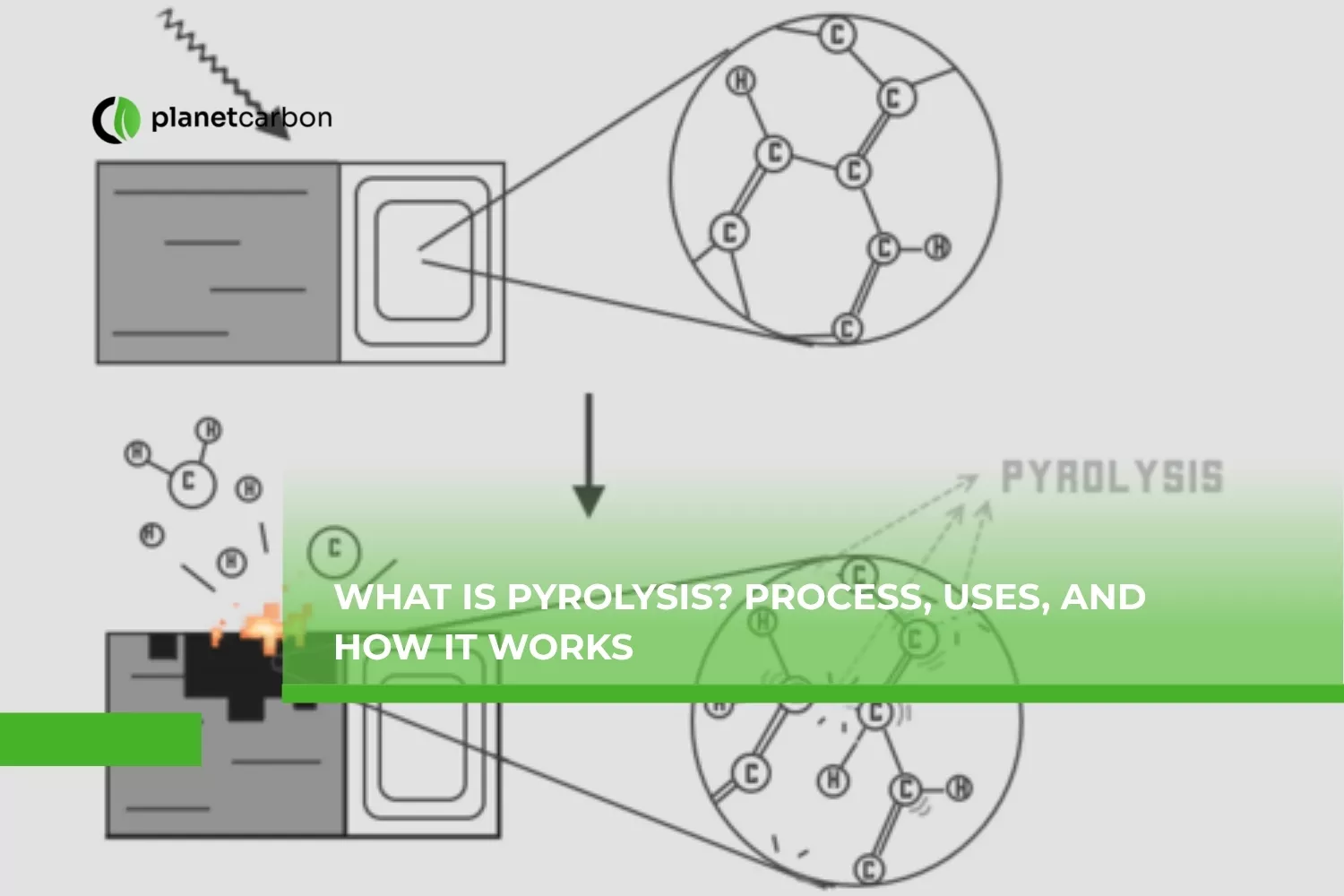
Biochar carbon sequestration represents one of the most scientifically durable carbon removal pathways currently available at scale. Biochar is produced through a process called pyrolysis, which heats organic biomass such as agricultural waste in a low-oxygen environment, converting it into a stable carbon-rich material. Because the carbon in biochar is chemically resistant to decomposition, it can remain sequestered in soil for hundreds to thousands of years rather than returning to the atmosphere.
This permanence distinguishes biochar from many nature-based carbon removal approaches, which carry reversal risks from fire, disease, or land-use change. In agricultural contexts, biochar also improves soil structure, water retention, and microbial activity, so the same intervention that sequesters carbon also increases land productivity. For project developers in Indonesia working with rice, palm, or sugarcane biomass residues, biochar offers a pathway to generate carbon credits while improving agricultural yields.
Planet Carbon’s integrated platform supports biochar project developers through the full development cycle: from project design and MRV system setup, through validation against recognized international carbon certification standards, to commercialization via publicly auditable carbon registries and corporate buyers. This end-to-end approach reduces the technical and commercial barriers that have historically limited biochar deployment at scale.
3. MRV Systems: The Foundation of Emission Reduction Accountability
Measurement, Reporting, and Verification (MRV) systems are the technical backbone of any credible carbon reduction or removal claim. Without rigorous MRV, emissions data cannot be independently audited, and carbon credits cannot be recognized by recognized international carbon certification standards or national compliance frameworks.
A robust MRV system covers three functions: measurement of baseline emissions and post-intervention reductions or removals using standardized methodologies, transparent reporting against those methodologies in a format accessible to third-party auditors (VVBs), and independent verification of reported figures by an accredited independent verification body before credits are issued. The integrity of this process directly determines whether carbon credits will be accepted by corporate buyers operating under SBTi-aligned commitments or national compliance obligations under Perpres 110/2025.
From Understanding Carbon Emissions to Real Action
Understanding what is carbon emissions at a conceptual level is the necessary starting point. However, translating that understanding into a verified, financeable decarbonization strategy requires technical depth, credible methodology, and a clear pathway from data to registered carbon credits.
For corporations working to meet ESG emissions compliance targets, for landowners managing agricultural waste streams, and for policymakers seeking to build domestic carbon market supply, the gap between intention and implementation is where most climate commitments stall. The challenge is not awareness but execution against a credible, auditable standard.
If your organization is exploring biochar carbon sequestration, MRV system design, or carbon credit commercialization within Indonesia’s evolving carbon market, the Planet Carbon team is available to walk through the options specific to your context.
Referensi:
- Global Carbon Project: Global CO2 emissions from energy and industry exceeding 37 billion tonnes (2023) – https://www.globalcarbonproject.org/carbonbudget/
- Our World in Data / Climate Watch: Energy sector share of global greenhouse gas emissions (approximately 73%) – https://ourworldindata.org/emissions-by-sector
- IPCC Sixth Assessment Report (AR6, 2022): AFOLU sector emissions share and land-use change data – https://www.ipcc.ch/report/ar6/wg3/
- IPCC AR6 Working Group I (2021): Observed global temperature increase of 1.1 to 1.2 degrees Celsius above pre-industrial levels – https://www.ipcc.ch/report/ar6/wg1/
- Nature Climate Change (2021): Projected decline in global maize yields under high-emissions scenarios – https://www.nature.com/nclimate
- Munich Re NatCatSERVICE: Annual economic losses from natural catastrophes – https://www.munichre.com/en/solutions/for-industry-clients/natcatservice.html
- Environmental Research (2021): Fossil fuel combustion responsible for approximately 8.7 million premature deaths annually – https://iopscience.iop.org/article/10.1088/1748-9326/abe76b
- GHG Protocol: Corporate Accounting and Reporting Standard (Scope 1, 2, 3 framework) – https://ghgprotocol.org/
- Science Based Targets initiative (SBTi): Corporate net zero standard and 1.5-degree alignment criteria – https://sciencebasedtargets.org/
- Integrity Council for the Voluntary Carbon Market (ICVCM): Core Carbon Principles (CCP) – https://icvcm.org/
- Oxford Principles for Net Zero Aligned Offsetting: Guidance on the role of carbon removal in net zero strategies – https://www.smithschool.ox.ac.uk/research/oxford-offsetting-principles
- Presidential Regulation No. 110 of 2025 (Perpres 110/2025): Legal foundation of Indonesia’s National Carbon Economic Value system (NEK) – https://peraturan.go.id/id/perpres-no-110-tahun-2025
Read Also : What is Net Zero Emission? Strategies, Challenges, and Biochar’s Role in Achieving Zero Emissions