

Agricultural companies and plantation operators are under increasing pressure to account for their carbon footprint. Between tightening ESG compliance requirements, rising carbon offset costs, and growing scrutiny from investors and regulators, finding a credible, science-backed carbon strategy is no longer optional.
At the same time, millions of tons of agricultural residues such as rice husks, sugarcane bagasse, and palm empty fruit bunches are burned or left to decompose each year. This not only represents a massive waste of potential value, but actively releases CO₂ and methane back into the atmosphere, compounding the very problem companies are trying to solve.
That is where biochar enters the picture. Understanding what is biochar, how it is produced, and why it is gaining traction in global carbon markets can help agricultural businesses, cooperatives, and sustainability teams unlock a genuinely dual-value solution: one that addresses waste management while generating high-integrity carbon credits at the same time.
What Is Biochar?
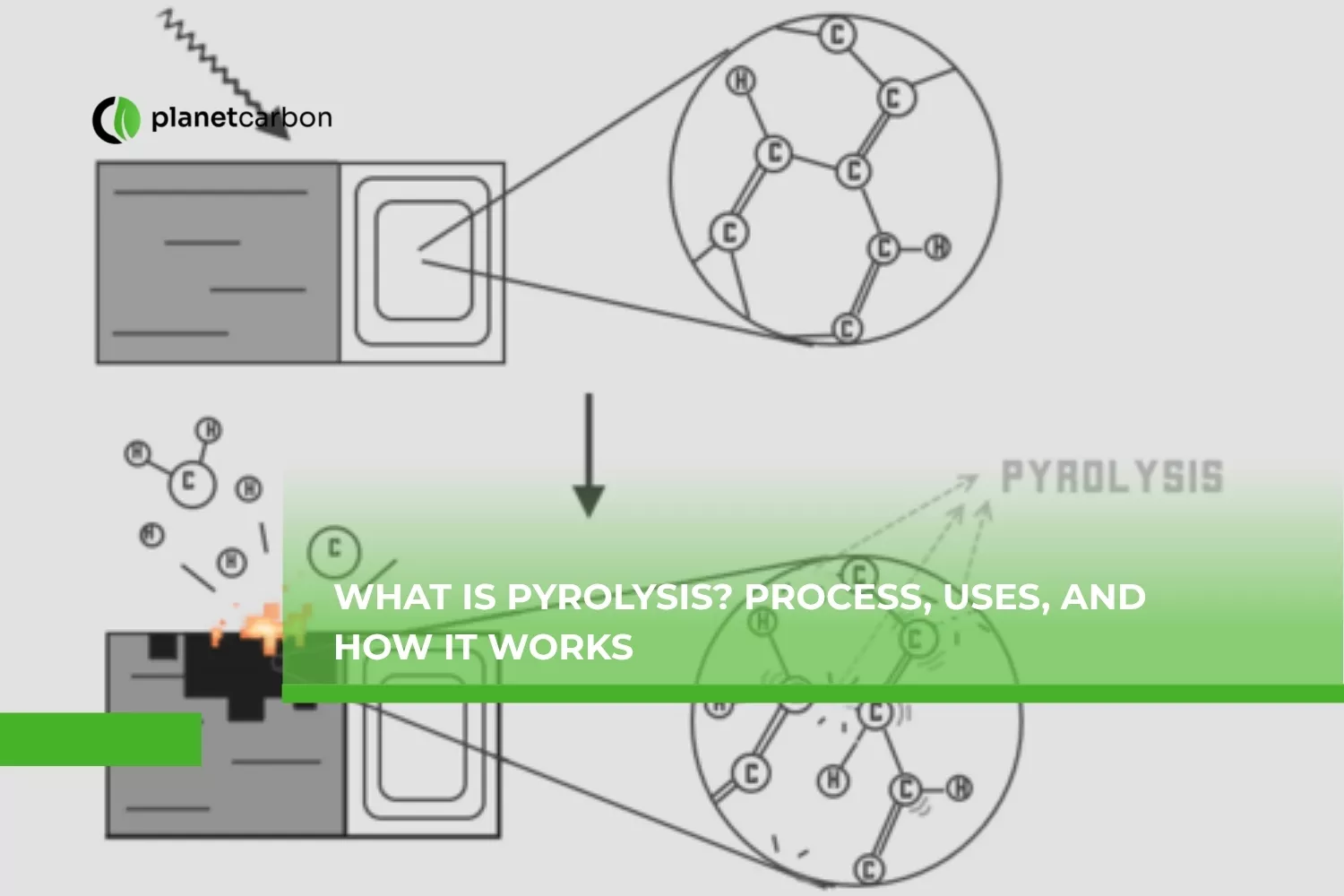
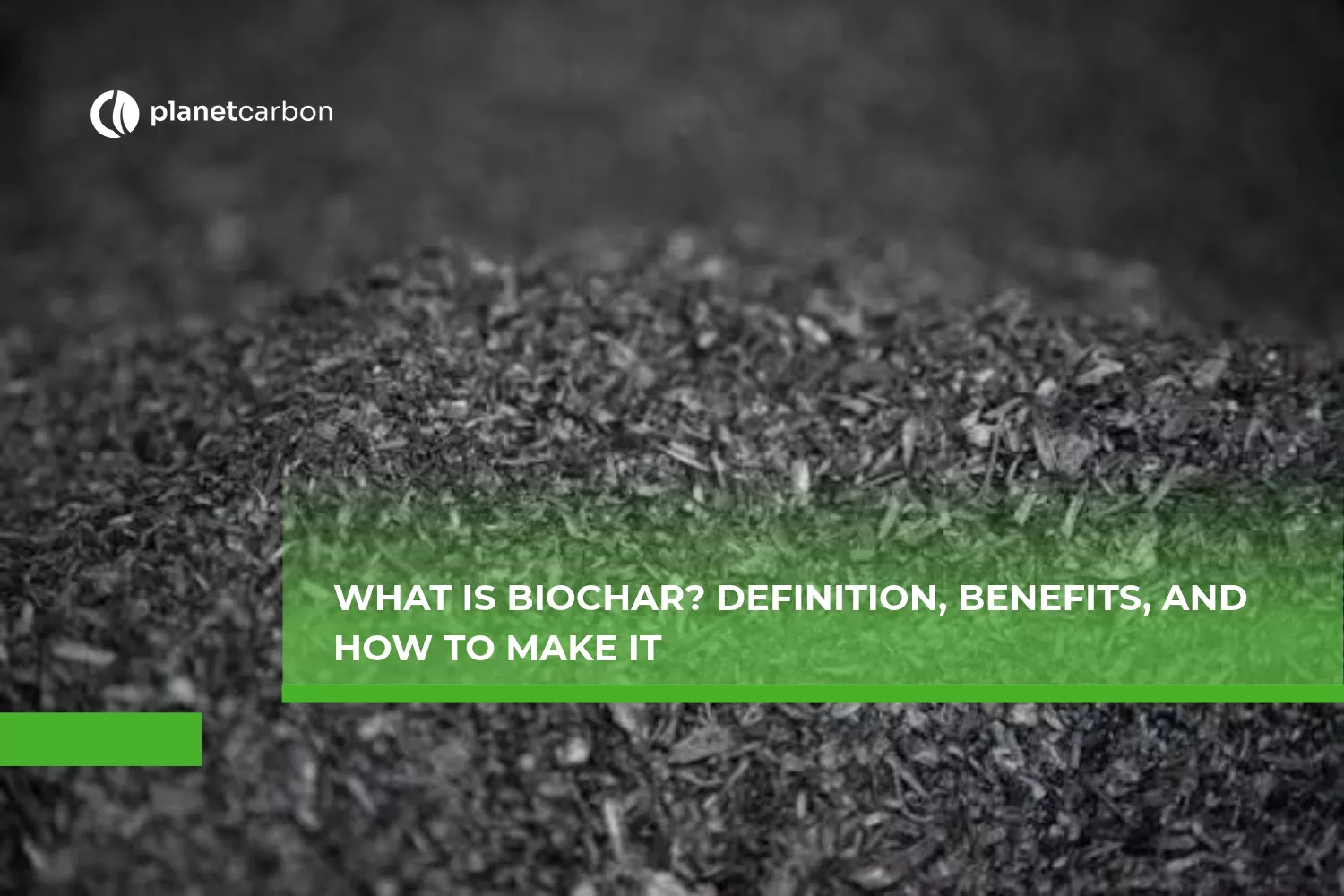
Biochar is a carbon-rich solid material produced by heating organic matter such as crop residues, wood chips, or agricultural waste in a low-oxygen environment through a process called pyrolysis. Unlike conventional combustion, this process does not burn the material completely, so it transforms it into a highly stable form of carbon that resists decomposition for hundreds to thousands of years.
The result is a porous, charcoal-like substance that can be applied to soil to improve fertility, retain water, and most importantly, lock carbon out of the atmosphere for the long term. In the context of carbon markets, biochar is increasingly recognized as a high-durability carbon dioxide removal (CDR) method because the carbon it stores is considered permanently removed from the active carbon cycle.
Origins of Biochar
The concept of biochar is not new, even though the global carbon market has only recently begun to formalize its value. Its roots trace back thousands of years to the Amazon Basin, where indigenous communities created what researchers now call Terra Preta, or “dark earth,” by burying charred organic material into the soil.
These ancient soils, some dating back more than 2,000 years, remain significantly more fertile than surrounding land today, which provides some of the most compelling real-world evidence for biochar’s long-term soil benefits. Modern science has since examined these soils extensively, and the findings have been instrumental in driving the current wave of interest from both the agricultural sector and carbon market developers.
The term “biochar” itself was coined in the early 2000s as researchers sought to distinguish it from charcoal used for fuel. Today it sits at the intersection of agronomy, climate science, and carbon finance, making it one of the more versatile tools available to businesses pursuing both sustainability and economic returns.
How Does Biochar Absorb Carbon?
When organic matter decomposes naturally or is burned openly, the carbon it contains is released back into the atmosphere as CO₂ or methane. Biochar production redirects this carbon into a stable solid form, preventing it from re-entering the atmosphere through a process grounded in thermochemical conversion.
During pyrolysis, temperatures typically ranging from 300°C to 700°C break down the organic material in the absence of oxygen, so the majority of the carbon is retained in the solid char rather than volatilized as gas. This is what gives biochar pyrolysis its climate relevance: the carbon that would have otherwise cycled back through the atmosphere is instead fixed into a structure that resists microbial breakdown for centuries.
Studies published in scientific journals, including research aggregated by the European Biochar Certificate (EBC), estimate that biochar can retain between 70% and 90% of the carbon originally present in the feedstock material. When this is combined with the fact that the feedstock itself was already capturing atmospheric CO₂ through photosynthesis, biochar production results in a net removal of carbon from the atmosphere, which is why it qualifies as a carbon dioxide removal technology rather than merely an offset.
Benefits of Biochar for the Environment
Biochar offers multiple environmental advantages that go beyond simple carbon storage, and this multi-benefit profile is a large part of why it has attracted serious attention from both regulators and investors in climate-tech. Each benefit reinforces the others, creating compounding value when biochar is applied at scale.
1. Long-Term Carbon Sequestration
Unlike biological carbon sinks such as forests or grasslands, which can release stored carbon if disturbed, degraded, or burned, biochar stores carbon in a chemically stable form that persists in the soil for hundreds to thousands of years. This durability is a core reason why biochar carbon credit products are increasingly favored by buyers seeking high-permanence removal credits in the voluntary carbon market.
Research published by the Intergovernmental Panel on Climate Change (IPCC) and various peer-reviewed journals estimates that properly produced biochar can sequester carbon with a half-life of well over 500 years under typical soil conditions. For businesses building long-term carbon strategies, this represents a fundamentally more credible form of carbon removal compared to many nature-based solutions.
2. Improving Soil Fertility
Biochar’s highly porous structure creates an enormous internal surface area, which supports water retention and provides habitat for beneficial soil microorganisms. When applied to degraded or low-fertility soils, it can significantly improve the physical and biological properties of the soil, making it a practical agricultural input and not just a climate tool.
A meta-analysis published in the journal GCB Bioenergy, drawing on hundreds of field studies, found that biochar application led to an average increase of approximately 10 to 42% in crop yields, depending on soil type and feedstock. For agricultural operators in tropical regions where soil degradation is a persistent challenge, this represents a measurable agronomic benefit alongside the climate value.
3. Reducing Greenhouse Gas Emissions from Soil
Agricultural soils are a significant source of non-CO₂ greenhouse gas emissions, particularly nitrous oxide (N₂O) and methane (CH₄), both of which are far more potent than CO₂ on a per-molecule basis. Biochar has been shown in multiple studies to reduce these emissions by altering soil chemistry and improving aeration, which inhibits the microbial processes that produce them.
A review published in Nature Communications found that biochar application reduced soil N₂O emissions by an average of 38% across a range of soil and crop types. This additional emission reduction is factored into some biochar carbon credit methodologies, further increasing the total climate value attributable to a biochar project.
4. Increasing Crop Productivity
Because biochar improves water retention, nutrient availability, and microbial activity simultaneously, its effects on crop productivity tend to be most pronounced in sandy or heavily leached soils common across large parts of Southeast Asia and sub-Saharan Africa. Farmers and plantation operators working with these soil types often see the most significant yield responses after biochar application.
Beyond yield, biochar can also reduce crop stress during dry periods by helping soil retain moisture longer between rainfall events. For plantation operators managing large areas of land under increasingly variable climate conditions, this water buffering effect has real economic value that compounds over time.
5. Reducing Dependence on Chemical Fertilizers
One of the less-discussed but commercially significant benefits of biochar is its ability to enhance the efficiency of fertilizers already being applied to the soil. Because biochar retains nutrients in the soil longer and reduces leaching, farmers can often achieve the same or better results with lower volumes of synthetic inputs.
Over time, this can translate into meaningful reductions in fertilizer costs, which represent one of the largest variable expenses in commercial agriculture. For businesses working to reduce both their environmental footprint and their operating costs, this dual benefit makes biochar a financially rational choice even before factoring in carbon credit revenue.
Process and How to Make Biochar
The biochar production process follows a defined sequence of steps, each of which affects the quality, carbon content, and market eligibility of the final product. Understanding these steps is essential for any organization considering biochar production as part of a formal carbon project.
1. Feedstock Selection
The process begins with choosing the right organic material. Common feedstocks include rice husks, sugarcane bagasse, coconut shells, palm empty fruit bunches, wood chips, and other agricultural residues that are available in sufficient, consistent volumes.
Feedstock selection matters because it directly influences the carbon content and physical properties of the final biochar. Materials with higher lignocellulosic content, such as woody biomass or husks, tend to produce biochar with higher fixed carbon content, which is a key quality indicator in most biochar verification standards.
2. Drying
Before pyrolysis, feedstocks typically need to be dried to reduce moisture content, ideally below 20% by weight. Excess moisture reduces the efficiency of the thermal conversion process and can result in lower-quality biochar with reduced carbon stability.
For large-scale operations, the drying stage is often the most energy-intensive part of the process unless waste heat from the pyrolysis unit itself is recovered and redirected. Optimizing this step is important both for production economics and for the overall greenhouse gas balance of the project.
3. Pyrolysis
This is the core transformation step, where dried feedstock is heated to temperatures typically between 350°C and 700°C in a low-oxygen or oxygen-free environment. The thermal decomposition converts the organic material into three co-products: biochar (solid), bio-oil (liquid), and syngas (combustible gas).
The temperature and residence time during biochar pyrolysis are the primary variables that determine the properties of the final product. Higher temperatures generally produce biochar with greater carbon stability and lower volatile matter content, both of which are favorable for carbon credit applications.
4. Charging (Optional)
Charging refers to the process of enriching biochar with additional nutrients, compost, or microbial inoculants before application to soil. This step is optional from a production standpoint but can significantly enhance the agronomic performance of the biochar, particularly in nutrient-depleted soils.
Some biochar producers and project developers include charging as a standard part of their product offering, especially when targeting agricultural clients who expect measurable yield improvements as part of the value proposition.
5. Application
The final step is applying the biochar to agricultural land at appropriate rates, typically between 1 and 20 tonnes per hectare depending on soil type, crop, and project design. Application method, depth, and timing all influence how effectively the biochar integrates into the soil system and delivers its intended benefits.
For carbon credit purposes, application must be documented and verified according to the applicable methodology, which means records of feedstock origin, production parameters, and field application are all required as part of the project’s MRV (Monitoring, Reporting, and Verification) framework.
Challenges in Biochar Production
Despite its promise, scaling biochar from pilot projects to commercially viable operations is not without obstacles. Organizations considering biochar as a business or sustainability strategy need to understand these challenges in order to design projects that are both technically sound and financially resilient.
1. Biochar Production Technology
Selecting and operating the right pyrolysis technology is one of the most significant technical decisions in any biochar project. Options range from small-scale flame curtain kilns to industrial continuous-feed reactor systems, each with different capital requirements, throughput capacities, and biochar quality outputs.
For organizations seeking to generate verified carbon credits, the choice of technology also has compliance implications because some methodologies require that the production system meets specific efficiency and emission standards. Investing in the wrong technology early can create problems during verification that are difficult and costly to resolve.
2. Feedstock Quality
Consistent feedstock supply is a persistent operational challenge, particularly for projects that depend on agricultural residues with seasonal availability. Variations in moisture content, particle size, and chemical composition can affect both production efficiency and biochar quality from batch to batch.
Carbon credit methodologies typically require that feedstock sourcing is documented and traceable, so informal or uncontrolled supply chains can create compliance gaps. Building structured feedstock supply agreements with farming cooperatives or plantation operators is generally a prerequisite for any serious biochar project development.
3. Regulation and Standardization
The regulatory landscape for biochar MRV verification and carbon credit issuance is still evolving, with multiple competing standards operating under different methodologies and eligibility criteria. This fragmentation can make it difficult for new entrants to identify which standard is most appropriate for their specific project context.
In some jurisdictions, biochar also lacks explicit regulatory recognition as a soil amendment, which creates additional uncertainty around land application practices. Organizations entering this space need expert guidance on both the voluntary carbon market standards and any local regulatory requirements that apply to their operations.
4. Scale of Adoption
Even when the technology and feedstock are in place, scaling biochar adoption among farmers and land managers requires behavioral change, which takes time. Many agricultural communities are unfamiliar with biochar and may be reluctant to apply an unfamiliar material to productive land without visible proof of benefit.
Demonstration projects and structured training programs are often necessary to build the trust and local knowledge base needed for widespread adoption. This is why the most successful biochar projects tend to combine technical implementation with community engagement and farmer education from the outset.
Biochar and Carbon Credits: A Real Market Opportunity
The voluntary carbon market has increasingly turned its attention to biochar as one of the few carbon dioxide removal methods that offers high permanence, measurable co-benefits, and the ability to scale rapidly using existing agricultural infrastructure. This convergence of factors has made biochar carbon credit projects a genuine commercial opportunity for organizations with access to biomass feedstocks.
1. Globally Recognized Biochar Verification Standards
Several internationally recognized standards currently govern the issuance of biochar-based carbon credits. The European Biochar Certificate (EBC) and the Biochar Carbon Removal Standard (BCR) from Carbon Standards International are among the most widely used, while Puro.earth operates as a marketplace that issues Supplier Carbon Credits specifically for engineered carbon removal including biochar.
Each standard has specific requirements around feedstock eligibility, production parameters, biochar quality testing, and permanence assessment. Selecting the right standard early in project development is critical because it determines what documentation, testing, and operational controls need to be in place from the beginning.
2. The MRV Process: Turning Biochar Projects into Verified Credits
MRV, which stands for Monitoring, Reporting, and Verification, is the backbone of any credible carbon credit project. For biochar, this process involves tracking feedstock inputs, measuring production outputs, testing biochar quality against standardized parameters such as H/C ratios and fixed carbon content, and documenting field application with GPS coordinates and application rates.
Third-party auditors then review this documentation against the applicable methodology before credits are issued. Organizations that invest in robust MRV systems from the start tend to have significantly faster verification timelines and lower per-credit compliance costs over the life of the project.
The Difference Between Biochar and Regular Charcoal
Biochar and regular charcoal are both produced through the thermal decomposition of organic matter, but they are designed for entirely different purposes and have very different quality profiles. Regular charcoal, whether for cooking or industrial fuel use, is optimized for its energy content and combustibility, so it is intended to be burned and therefore releases its stored carbon back into the atmosphere.
Biochar, by contrast, is produced under controlled conditions specifically to maximize carbon stability and soil functionality. It undergoes quality testing to confirm parameters such as fixed carbon content, pH, heavy metal concentrations, and polycyclic aromatic hydrocarbon (PAH) levels, all of which must meet defined thresholds before it can be applied to soil or registered under a carbon credit standard.
Using regular charcoal as a soil amendment is not equivalent to using biochar and does not qualify for carbon credit issuance. The distinction matters because it reflects a fundamentally different intent: biochar is designed to remain in the soil indefinitely, while charcoal is designed to be consumed as energy.
Biochar as a Carbon Solution: From Waste to Carbon Credit
For agricultural businesses, cooperatives, and sustainability teams dealing with mounting biomass waste and growing pressure to demonstrate credible climate action, biochar represents something genuinely useful: a solution that is grounded in science, supported by established market infrastructure, and capable of generating measurable financial returns alongside environmental benefits.
What is biochar ultimately comes down to this: a stable form of carbon derived from agricultural waste that can improve soil, reduce emissions, and generate verified carbon credits, all within a single integrated project. The agricultural residues that are currently being burned or left to decompose are not a liability to be managed but a resource waiting to be converted into long-term value.
If your organization is sitting on significant volumes of agricultural residues and is looking for a credible, independently verified path to carbon credit revenue, it is worth having a conversation with a team that has the experience to guide a project from biomass assessment through to credit issuance. Planet Carbon’s integrated platform covers the full lifecycle of biochar project development, from technical feasibility and feedstock analysis through MRV design and commercialization, and the team is available to discuss your specific context without any obligation. Reach out to start that conversation.
Referensi:
- European Biochar Certificate (EBC): Biochar quality standards, permanence assessment, and carbon credit methodology requirements. https://www.european-biochar.org
- Intergovernmental Panel on Climate Change (IPCC): References to biochar as a carbon dioxide removal method and permanence estimates in AR6 reports. https://www.ipcc.ch
- GCB Bioenergy (peer-reviewed journal): Meta-analysis of biochar effects on crop yield across global field studies. https://onlinelibrary.wiley.com/journal/17571693
- Nature Communications: Study on biochar’s effect on soil nitrous oxide emissions, reporting average reduction of approximately 38%. https://www.nature.com/ncomms
- Puro.earth: Marketplace methodology for biochar-based Supplier Carbon Credits (engineered carbon removal). https://puro.earth
- Carbon Standards International (Biochar Carbon Removal Standard): Methodology for verifying and issuing biochar carbon removal credits. https://carbonstandardsinternational.com